



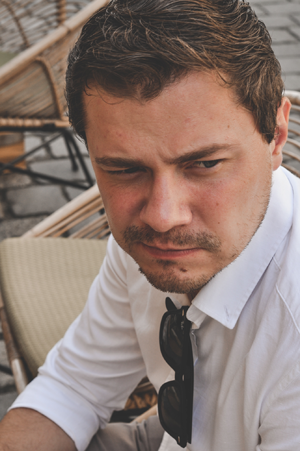
Dr Tomasz Pełech
Department for research on late antiquity and early medieval studies
t.pelech(at)iaepan.edu.pl
https://orcid.org/0000-0002-3722-568X
https://iaepan.academia.edu/TomaszPe%C5%82ech
https://scholar.google.com/citations?user=G3TbmO8AAAAJ&hl=pl
Research interests:
My research interests focus on the political, social, and cultural history of the eastern Mediterranean basin in the eleventh and twelfth centuries, with particular emphasis on the Latin Levant that emerged after the First Crusade. At the centre of my research lies the Kingdom of Jerusalem, approached as a distinctive ‘laboratory’ of power in which Western, Byzantine, and Islamic traditions intersected. I am primarily concerned with the mechanisms of the exercise and legitimation of royal authority, the relationships between the monarch and secular and ecclesiastical elites, and the role of conflict, ritual, and political communication in processes of elite integration.
A significant area of my research involves the analysis of narrative and diplomatic sources from the Latin East, especially works relating to the First Crusade, with particular emphasis on the writings of Raymond of Aguilers. I am interested in the ways in which the image of the ‘other’ was constructed, in the sacralisation of violence, and in the presence of the miraculous and theological interpretation in narratives of war. Methodologically, my work draws on cultural history, the history of ideas, and social network analysis (SNA), treating elites, authors, and witnesses to documents as actors embedded in dynamic relational networks.
Selected publications:
Monographies:
- Obraz muzułmanów w ‘Historia Francorum qui ceperunt Iherusalem’. Studia nad warsztatem literackim Rajmunda z Aguilers [The Image of Muslims in the Historia Francorum qui ceperunt Iherusalem: A Study of Raymond of Aguilers’ Literary Techniques], Wrocław 2025: Chronicon
- Obraz „obcego” w ‘Aleksjadzie’ Anny Komneny. Przypadek Normanów [The Image of the „Other” in the Anne Komnene’s Alexiad: The Case of Normans]. Wrocław 2016: Chronicon
Articles:
- Konfratrzy świeccy kanoników regularnych Grobu Bożego w Jerozolimie (1099–1187) [Lay Confraternity of the Canons Regular of the Holy Sepulchre of Jerusalem (1099–1187)], „Res Historica” 59 (2025): 1611–1657
- The Kingdom of Jerusalem and Egypt in the Early 12th Century. The Case of Asia and Babylon in the Title of Baldwin of Boulogne, „Quaestiones Medii Aevi Novae” 28 (2023): 71–89
- Studia nad tytulaturą Baldwina I, króla Jerozolimy (1100–1118) [Studies on the title of Baldwin I, the king of Jerusalem (1100–1118)], „Studia Źródłoznawcze” 61 (2023): 11–34
- Un réemploi de Flavius Josèphe par Foucher de Chartres: l’or arraché aux cadavres [A reuse of Flavius Josephus by Fulcher of Chartres: the gold snatched from the corpses], „Cahiers de civilisation médiévale” 259 (2022): 259–274
- From the house of the devil to the God’s temple – “abrenuntiatio diaboli” and “confessio fidei” in the narration about the foundation of the bishopric of Albara during the First Crusade in the ‘Gesta Francorum’ and the ‘Historia de Hierosolymitano Itinere’, „Quaestiones Medii Aevi Novae” 26 (2021): 33–53
- Death on the Altar: the Rhetoric of „Otherness” in Sources from the Early Period of the Crusades, „Journal of the Australian Early Medieval Association” 17 (2021): 67–89
Current research project:
- NCN grant – OPUS no. 2025/57/B/HS3/01149, entitled: Consensus and Power: Kingship and Political Culture in Crusader Jerusalem (1100–1192).
The main aim of the project is to present the idea and practice of kingship in the Kingdom of Jerusalem between 1100 and 1192, i.e. from the reign of Baldwin I (1100–1118) to the end of the reign of Guy of Lusignan (1186–1192). Thus, the chronological scope includes the taking of the royal title by the first Latin monarch in Jerusalem and the loss of the Holy City, which had its practical and ideological dimensions related to the reduction of the Kingdom of Jerusalem’s borders to the Levantine coast.
The project assumes the following research objectives: (1) to determine the impact of Jerusalem, and the monarchs’ ever-increasing emphasis on its sanctity, on the collective ideas about kingship in the Crusader states in the 12th c.; (2) to study the royal title(s), especially through the intitulatio on the charters produced by the chancery of Kingdom of Jerusalem as the most comprehensive depiction of king’s presentation; (3) to establish the key ideas in the kings of Jerusalem’s self-presentation: whether was it the imitatio Christi (the imitation of Christ)? (4) to indicate that the practice of royal power in the Kingdom of Jerusalem has never bore the character of the autocratic power, exercised against or without the will of the political elites, therefore, the Kingdom was never seen as the private property of the king and his lineage, who ruled not independently but within a framework defined by a political culture, which can be described as a rule by consensus.
Scholarships:
- 2024 Lanckoroński Foundation Scholarships
- 2017/2018 Wincenty Styś Scholarship in the field of Human and Social Sciences
- 10/2014–2/2015 European Social Fund Scholarship
- 2015–2018 BGF Doktorat Cotutelle (Instytut Historyczny Uniwersytetu Wrocławskiego / École Doctorale des Lettres, Sciences Humaines et Sociales, Université Clermont-Auvergne)
- 2012/2013 | 2017/2018 Scholarship of the Ministry of Science and Higer Education in Poland