


Crossing borders, building walls. Towards ethnography of Russian war mobilisation

Project information
Research project’s title: Crossing borders, building walls. Towards ethnography of Russian war mobilisation
Funding: Polish National Agency for Academic Exchange (NAWA) nr BPN/GIN/2022/1/00082/DEC/1
Dates: 16.01.2023-16.01.2024
Project leader: dr Zuzanna Bogumił
Project host: Institute of Archaeology and Ethnology of the Polish Academy of Sciences
Cooperating Institutions: University of Eastern Finland, Wydział Socjologii UW, Instytut Slawistyki PAN, Nazarbayev University, Ilia State University, Institute of Archaeology and Ethnology NAS RA, Bursa Uludağ University
Contact: e-mail: zbogumil(et)iaepan.edu.pl
Project objectives
The main goal of the project is to investigate the specificity of the migration wave related to mobilisation in Russia announced in September 2022 regarding the ongoing war in Ukraine. Project puts a particular focus on establishing: how do migrants explain their decision to flee from mobilisation? How do they explain the mobilisation? To what extent do they perceive the migration as an individual, social and political act? The project recognizes that the mobilisation is a new pushing factor in the contemporary European and World’s migration crisis, and therefore it requires a separated academic reflection. Moreover, since February 2022, there has been a clear and dynamic increase in the number of Russian diasporas in Europe and around the world, and their status and role require investigation. We therefore focus on Russian migration of mobilisation in order to establish how it fits into the debates about the humanitarian crisis, what are its particular features and how mobilisation as a pushing factor affects the current migration landscape. Within the framework of the project in 8 selected countries - Poland, Finland, Estonia, Georgia, Armenia, Turkey, Kazakhstan and Mongolia - we aim to conduct in-depth interviews (IDI) each with migrants/refugees/fugitives/conscientious objectors of Russian citizenship from different social strata and ethnic groups who crossed the border after the announcement of partial mobilisation in their country. As a supplementary methods we use participant observation and critical discourse analysis (CDA), essential for contextualising this wave of migration in particular countries.
The project involves conducting interviews with people in the migration crisis, which is why we attach great importance to the methodology, ethics, safety of research and securing the collected data. The ethical principles of the project "Crossing borders, building walls" are based on the universal principle of respect for human rights. In the protection and processing of personal data, we follow the principles contained in Regulation 2016/679 - Protection of natural persons with regard to the processing of personal data and on the free movement of such data, and repealing Directive 95/46/EC (General Data Protection Regulation ), and relevant documents applicable to our partners from outside the EU whose countries have not adopted Regulation 2016/679.
Events
Online seminars
Crossing Borders, Building Walls: Implications of the Russian Wars
October, 18 2023 at 9.00 – 10.30am CEST
Florian Mühlfried (Ilia State University), Between Hospitality and Hostility: Russian Citizens in Georgia
My presentation will be divided into two parts. In the first part, I differentiate groups of Russian relokanty to Georgia and emphasise the double discrimination of people from the North Caucasus. In the second part, I will talk about my current research project on encounters of Georgian and Russian hipsters in Tbilisi.
December, 6 2023 at 9.00 – 10.30am CET
Bella Ostromooukhova (Sorbonne University), Children book professionnals between Russia and Exile
My presentation will focus on migration in Russian children's publishing. I will analyze the various ways of cutting ties and maintaining contact with the professional milieu in Russia, and of recomposing networks in exile. I will also examine the positionnings of players in the children's book market in relation to the war in Ukraine and the repressive policies of the Russian government.
February, 7 2023 at 9.00 – 10.30am CET
Nvard Melkonyan (Yerevan State University) and Yuliana Melkumyan (Yerevan State University), Russian relocants in Armenia: the impact of Russian-Ukrainian war
Our presentation will focus on Russians, who relocated their families and businesses to Armenia because of the war outbreak in Ukraine in February 2022. We will analyse the pull and push factors forcing their migration, the patterns of integration in Armenian society and segregation risks. The special emphasize will be on the analysis of the situation, when people flee their own country due to war and settle in a country, which is also in the situation of war.
International Academic Conference
(In)Visible Russian (Anti-)War Migration
March 13-15, 2024, Warsaw
The full-scale aggression of the Russian state against Ukraine on February 24, 2022 triggered new migration, refugee, humanitarian and political crises in European and Asian countries. Russia's aggression forced Ukrainians to flee from the war, but also pushed Russians to leave their country en masse. Russian (anti-)war migrants are people of various social, religious and national backgrounds with different views and attitudes towards Putin’s regime. Their migration affects not only the migrants themselves and the host societies, but also the broader situation in Russia itself. The conference will provide a platform for discussion among researchers from various disciplines and academic backgrounds to approach various dimensions of the Russian (anti-)war migration and investigate responses to it on micro-, meso- and macro- levels.
Conference materials:
CfP
Conference programme
Conference poster
Conference Report
Recordings from the (In)Visible Russian (Anti-)War Migration Conference 13-15 March 2024:

Project team
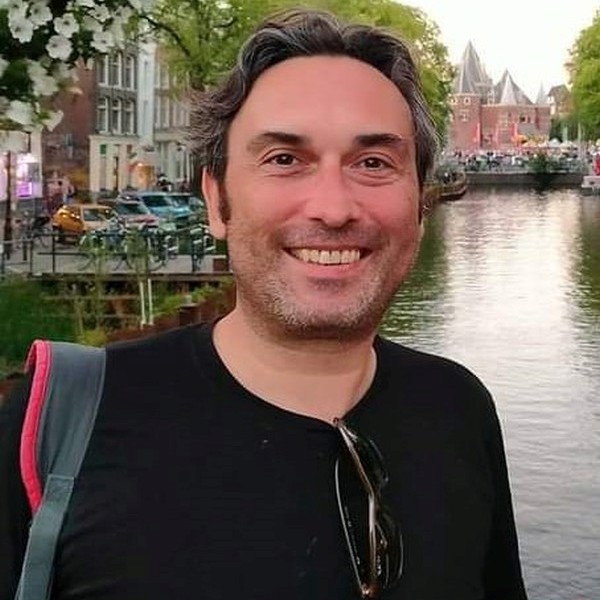
Mustafa Berkay Aydın with a bachelor's degree in Sociology (Ankara University, Ankara, Turkey) and he obtained PhD (2015) in Sociology (Middle East Technical University, Ankara, Turkey). Now, he works as Assoc. Prof. at Bursa Uludağ University Department of Sociology, Bursa/Turkey. He is interesting in digital sociology, sociology of sport, applied sociology, political sociology, migration and sociology of work. He has published some publications in these areas. He conducts researches at Turkey, on the other hand he was at different countries and universities as a visiting reseacrher at his academic process in a various times such as University of Kent (UK), London Metropolitan University (UK) and Stockholm University (Sweden). Detailed Infırmation: https://avesis.uludag.edu.tr/berkayaydin, email: berkayaydin(et)uludag.edu.tr)
Zuzanna Bogumił (project coordinator) is cultural anthropologist, working at the Institute of Archeology and Ethnology, Polish Academy of Sciences. She specializes in memory studies, museum studies and anthropology of religion. Bogumił is an author, co-author or co-editor of several books, among them: Gulag Memories: The Rediscovery and Commemoration of Russia's Repressive Past (Berghan Books 2018), Milieux de mémoire in Late Modernity. Local Communities, Religion and Historical Politics (Peter Lang 2019). Memory and Religion from a Postsecular Perspective (Routledge 2022). She currently coordinates several projects among them project Post-secular approach to memory processes in Central-Eastern Europe sponsored by Visegrad Found.
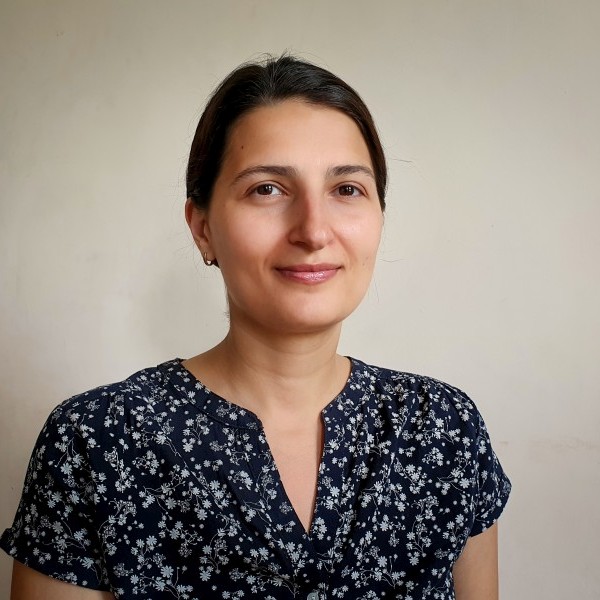
Mariam Darchiashvili is an Assistant-Professor in social and cultural anthropology at Ilia State University, Georgia. Her research interest includes migration and mobilities, informality, and economic and legal anthropology. As a researcher, she has been involved in the following scientific projects: ‘Religiosity among young Georgians’ (2015-2018); ‘Infrastructure and Narratives: Black Sea Networks’ (2018-2019); ‘Surrogacy as Networked Phenomenon: the study of key actors and their interrelations’ (2020-2023), ‘Death in migration: perspectives from the post-Soviet space’ (2021-2022). Her articles have appeared in Nationalities Papers, Journal of Religion in Europe, and Revue Européenne des Migrations Internationales (REMI).
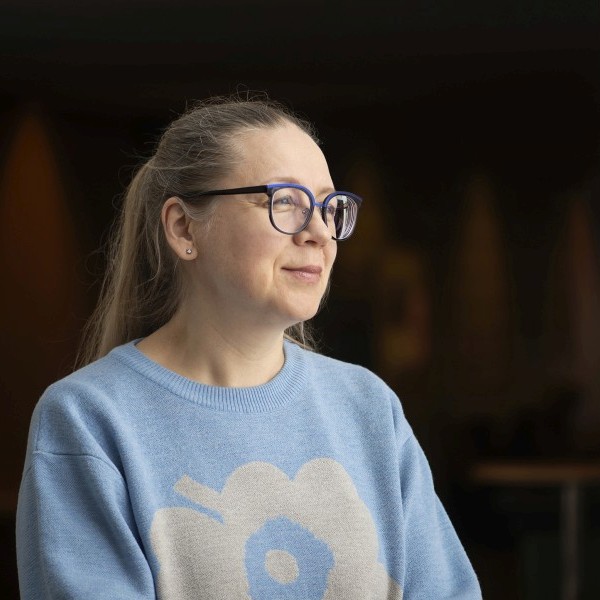
Olga Davydova-Minguet, PhD in ethnology, holds a professorship in Russian and border studies at the Karelian Institute of the university of Eastern Finland. Davydova-Minguet’s main research interests fall within the intersections of migration, cultural, gender and transnational studies. She has studied immigration of Russian speakers to Finland since the beginning of 2000s. With her research group, recently she has conducted research projects focusing on transnational politics of memory in the border areas of Finland and Russia, media use of Russian speakers in Finland, and perceptions of Russia in Finnish border areas among different population groups. Her current Finnish Academy’s funded research project delves into death practices among Russian-speaking immigrants in Eastern Finland, and into the meanings of death in memory politics in bordering Republic of Karelia in Russia and Eastern Finland.
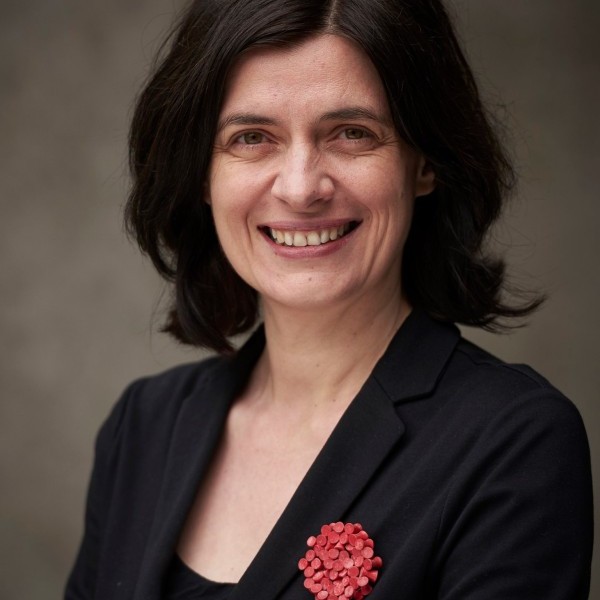
Ketevan Gurchiani is a professor of anthropology at Ilia State University in Tbilisi, Georgia. She is particularly interested in lived religion, the domesticated and undomesticated nature of the city, and informal practices of resistance. Since 2020, Ketevan Gurchiani has been leading the project: "Tbilisi as an Urban Assemblage" (https://urbanassemblage.iliauni.edu.ge). In this project she is interested in different aspects of the intertwining of human and non-human in the city. Ketevan Gurchiani is also involved in the projects "An Anthropology of Gardens Otherwise and Elsewhere", "Surrogacy as Networked Phenomenon", and “Conflict and Cooperation in Eastern Europe”. Webpage https://faculty.iliauni.edu.ge/arts/ketevan-gurchiani/?lang=en
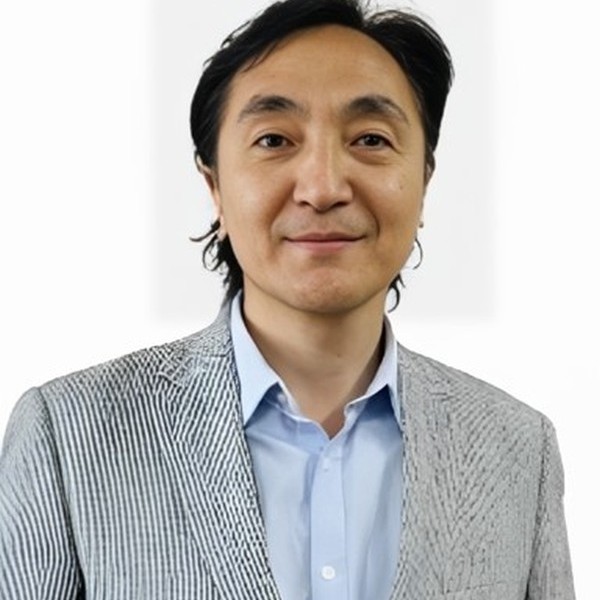
Byambabaatar Ichinkhorloo PhD is the head of the Challenge Local Development Research Institute in Mongolia and a senior lecturer at the Department of Anthropology and Archaeology, National University of Mongolia. Previously, he worked as a lecturer at the University of Zurich and a co-investigator of "Gobi Framework" research project at the University of Oxford. As a social anthropologist, Byamba is studying how people make a living in Mongolia since 1990. His earlier research focused on social networks, pastoralism, and political economy and ecology. Recently, he studies nomadic cultures, state policies, and mining impacts in Inner Asia. His latest publication includes the "Impact of Mining Lifecycles in Mongolia and Kyrgyzstan: Political, Social, Environmental and Cultural Contexts."
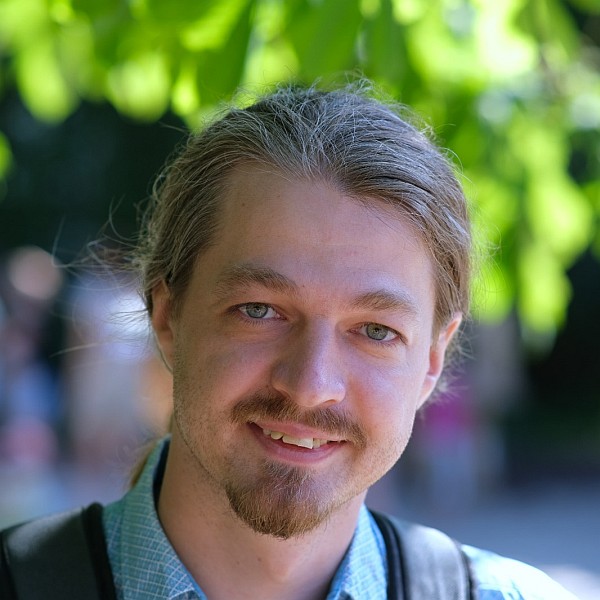
Alexander Makhov is a PhD student at the Graduate School for Social Research (The Polish Academy of Science). He studies the impact of state memory politics on academic history in Putin's Russia. His research interest includes non-democratic politics of identity and academic freedoms in illiberal regimes with a focus on social sciences and humanities.

Nikita Mishakov is a PhD student at the Eurasian Studies program, Nazarbayev University, (Astana, Kazakhstan). His research area are migration and border studies, bureaucracy studies and economic sociology. His last project focused on street-level bureaucracies in public Russian social services, emphasizing citizen classification and paperwork's role. His current project focuses on migration patterns from Russia to Kazakhstan after the announcement of partial mobilization by Vladimir Putin in September 2022.
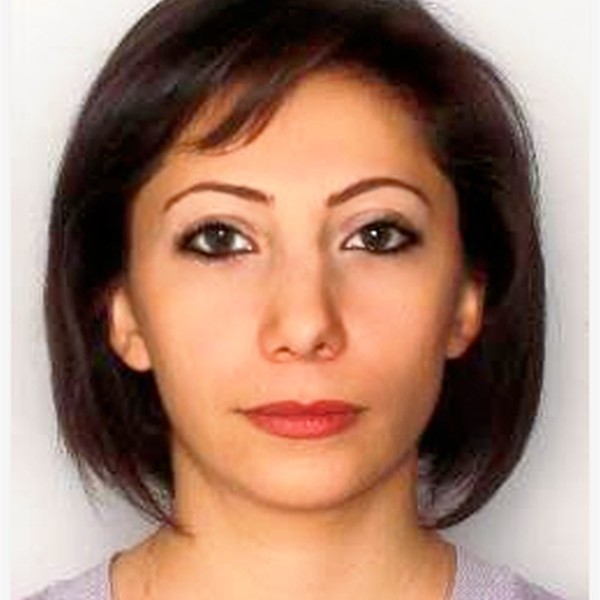
Sona Nersisyan received PhD degree in history and ethnology at the Institute of Archeology and Ethnography NAS RA. I am a senior researcher at the Department of Diaspora Studies at the same Institute. Also, I have an experience of working as a lecturer at the Armenian State Pedagogical University, and Scientific Advisor to the Director of National Institute of Labor and Social Research by Ministry of Labor and Social Affairs of RA.I managed and participated in the international and state research projects in different fields, which include migration, diaspora studies, repatriation studies, social network analysis, investment and socio-economic studies.
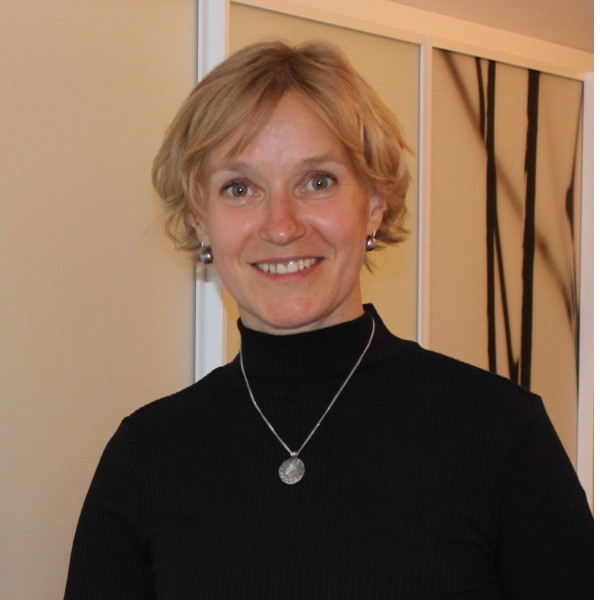
Raili Nugin is a sociologist, working at the School of Humanities, Tallinn University. During her academic career she has studied transition to adulthood, generational conceptualisation, youth mobilities, rural youth, rural-urban relations, memory transmission and social exclusion. Within her different research projects (international and national), she has also studied Russian ethnic minorities in Estonia and recently, Ukrainian refugees in the context of rural-urban networks. She has authored several research articles in different journals (Memory Studies, Journal of Youth Studies, Journal of Rural Studies, Sociologia Ruralis), edited a book about generations (“Generations in Estonia: Contemporary Perspectives on Turbulent Times,” Tartu University 2015) and written a monograph about the generation born in the 1970s (“The 1970s: Portrait of a Generation at the Doorstep,” Tartu University 2015).

Tomasz Rawski is a political and cultural sociologist focused on researching memory politics, nationalism/war and state socialism in contemporary Eastern Europe and beyond. He authored a book on Bosniak nationalism in Bosnia and Herzegovina after 1995 and several articles in renowned journals, including East European Politics and Societies, International Journal of Comparative Sociology and Problems of Post-Communism. He participated in research projects focused on memory politics, including H2020: REPAST and H2020: DisTerrMem. He was a visiting scholar at University College London, Uppsala University and University of Sarajevo.

Katarzyna Roman-Rawska, assistant professor at the Institute of Slavic Studies of the Polish Academy of Sciences. Literary scholar, sociologist, publicist and literary translator. She works on the intersection of culture and politics as well as anti-regime and anti-war resistance in contemporary Russia. https://pan-pl.academia.edu/KatarzynaRomanRawska
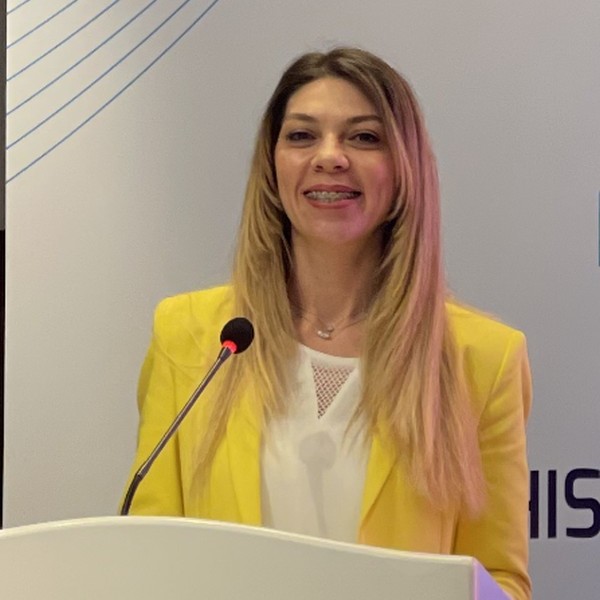
Tamilla Şahin is a PhD student at the Bursa Uludag University, Department of Labour Economics and Industrial Relations. At the same time, I am continuing my doctoral education as project assistant in Priority Migration area within the YÖK 100 / 2000 program. My research interests include immigration, Meskhetian Turks and their social issues.
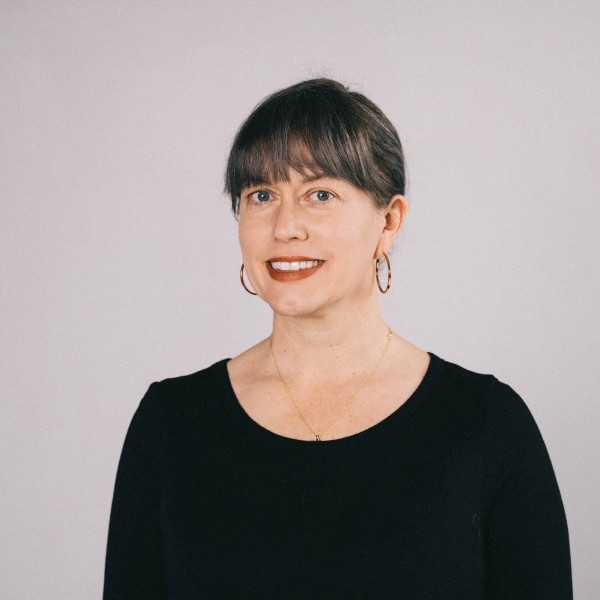
Caress Schenk is an Associate Professor of political science at Nazarbayev University (Astana, Kazakhstan) with teaching and research expertise in the politics of immigration and national identity in Eurasia. Her new book, published with the University of Toronto Press, is called Why Control Immigration? Strategic Uses of Migration Management in Russia. Current and previous research has been funded by the American Councils for International Education, Nazarbayev University and the Fulbright Scholar Program and has been published in Demokratizatisya, Europe-Asia Studies, and Nationalities Papers, and in edited volumes published by Edinburgh University Press and Oxford University Press. Dr. Schenk is a member of the Program on New Approaches to Research and Security in Eurasia (PONARS Eurasia).
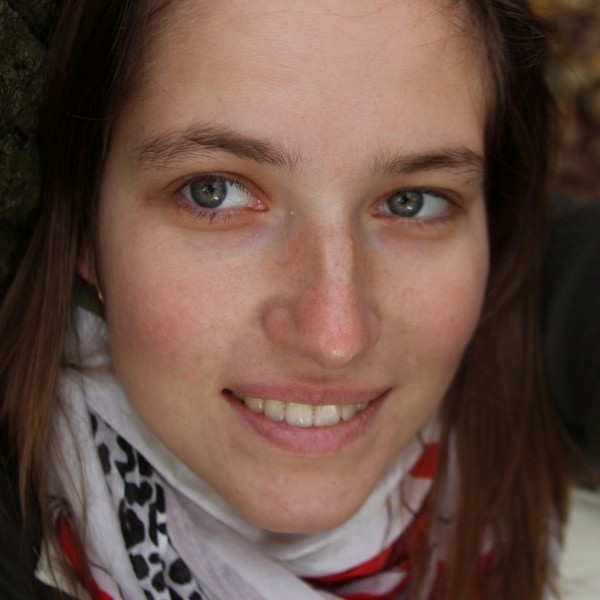
Anna Sokolova is a Kone Foundation Fellow at the Helsinki Collegium for Advanced Studies (University of Helsinki). Her previous research was related to Soviet death and funeral culture, which resulted in the book “A New Death for a New Man? Funeral Culture in the Early Soviet Union” (2022, in Russian). Her current project tends to reveal everyday life in timber production workers’ settlement of late Soviet Karelia.
Project partners



Post-secular approach to memory processes in Central-Eastern Europe

Project information
Research project’s title: Post-secular approach to memory processes in Central-Eastern Europe
Funding: The project is financed by the Governments of Czechia, Hungary, Poland and Slovakia through Visegrad Grants from International Visegrad Fund ID 22230096
Dates: 01/03/2023 – 31/08/2024
Project leader: dr Zuzanna Bogumił
Project host: Institute of Archaeology and Ethnology of the Polish Academy of Sciences
Cooperating Institutions: Charles University, Slovak Academy of Sciences, Moholy-Nagy University of Art and Design, National University of Kyiv-Mohyla Academy
Contact: e-mail: zbogumil(at)iaepan.edu.pl
Project objectives
There is a lack of understanding and appreciation of the subtle and diverse connections between memory and religion. Religion is often reduced to a tool of the national politics of memory. Religious memory is perceived as an inner phenomenon of a religious group, and the influences of religion on secular memory are thereby ignored. This project aims to fill this gap by gathering a team of researchers from different academic fields to discuss various relationships between religion and memory and to conceptualize exiting interdependencies of institutionalized churches, vernacular religious communities, authorities, and civil society in the process of memory production in the V4+ countries.
By focusing on the selected countries of the region and various Christian denominations, our research group will jointly conceptualize post-secular memory for its applicability to the CEE societies. We will also discuss implementation of the elaborated post-secular concepts in specific empirical cases, which each of the project participants are expected to work on individually. These individual cases will focus on different aspects of memory development, such as gender influence, materiality of memory, and memory politics.
Planned events
Kick-off meeting (March 2023, online)
One-day online research meeting bringing the partners together to meet each other and elaborate a detailed research working plan. The meeting is organized by Polish partner.
Regular online meetings (March 2023 – June 2024, online)
We organize one working seminar each month to discuss selected articles and books, existing concepts of postsecularity and establish what we understand by postsecular approach to memory processes in Visegrad region.
Workshop, Bratislava (20 – 23 September 2023, in person)
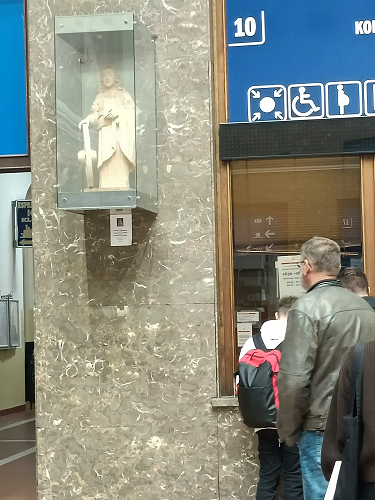
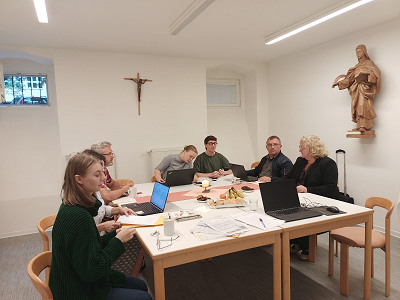
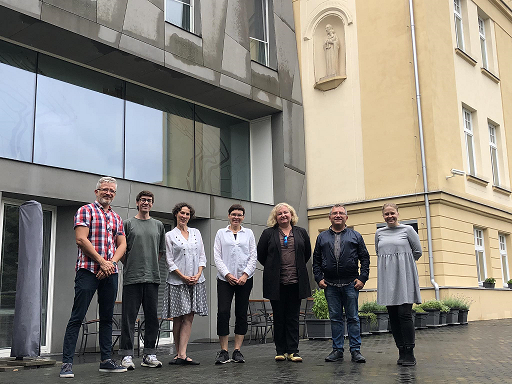
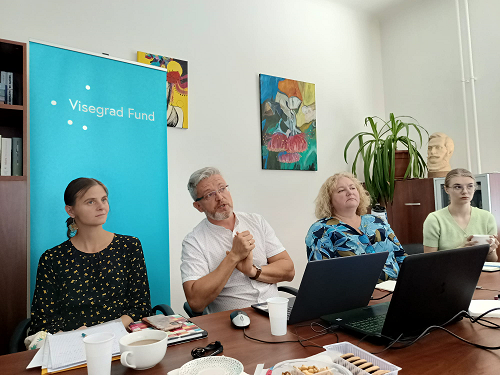
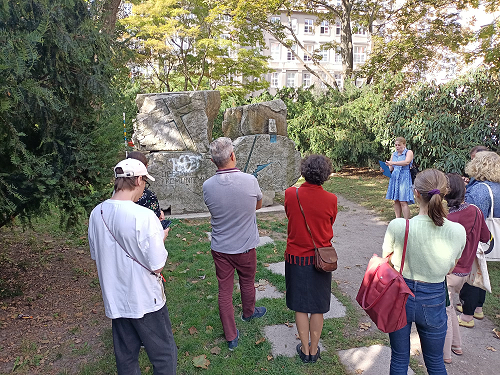
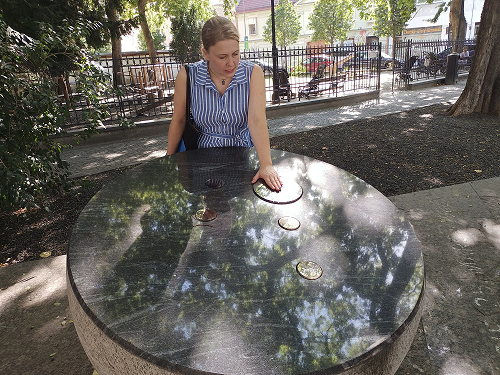
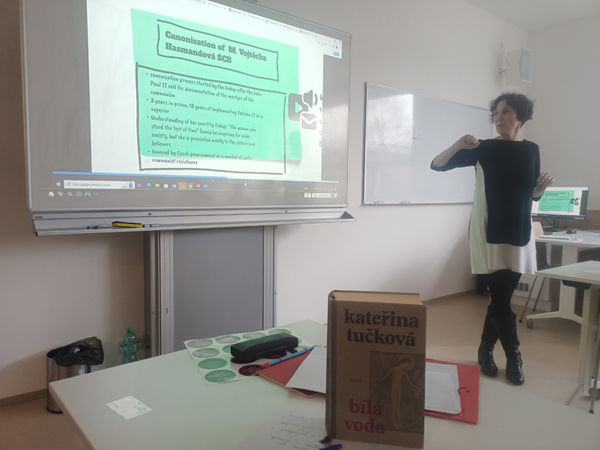
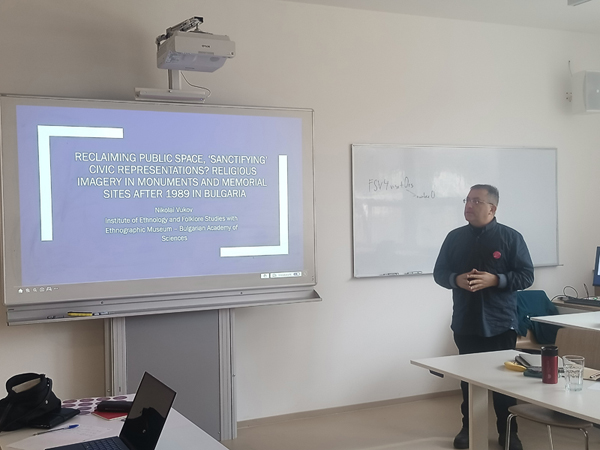
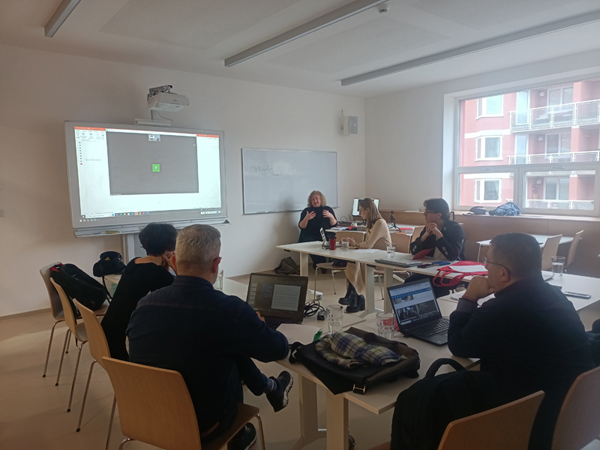
3-days workshop in Bratislava brought together team partners who discussed ongoing achievements of the project. During this workshop, we focused on the frame of the concepts of post-secular memory that we plan to apply to memory processes in Visegrad region. We had a postsecular walk in Bratislava made by Agáta Šústová Drelová. Later, each team member presented its individual project.
Workshop, Prague (31/01 – 02/02 January 2024, in person)
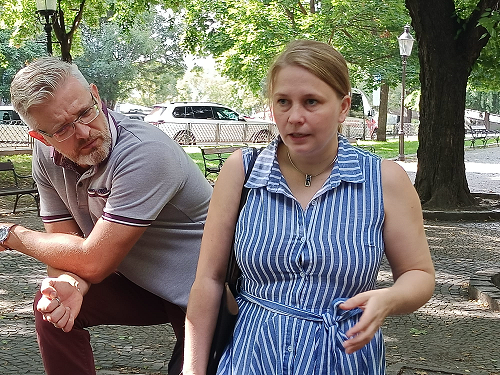
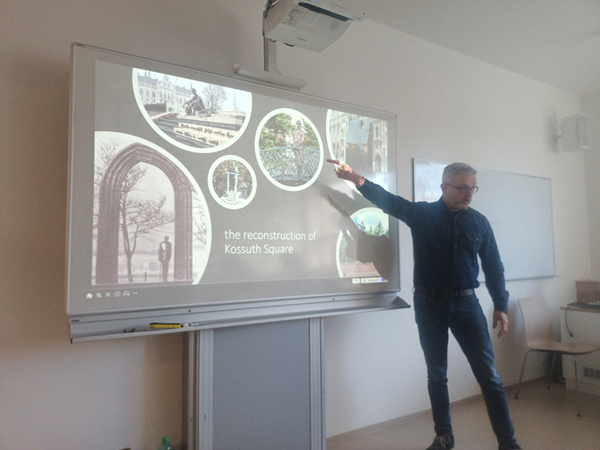
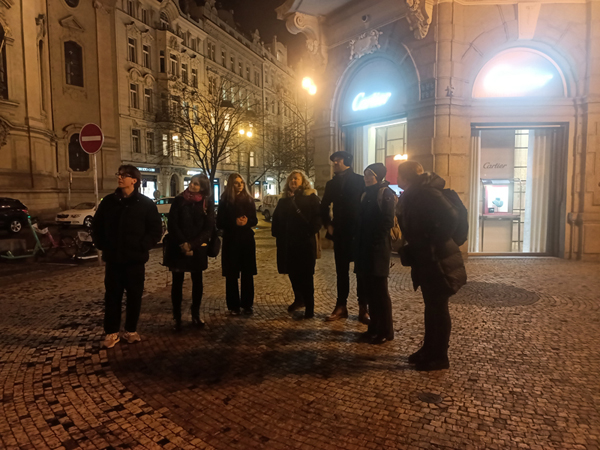
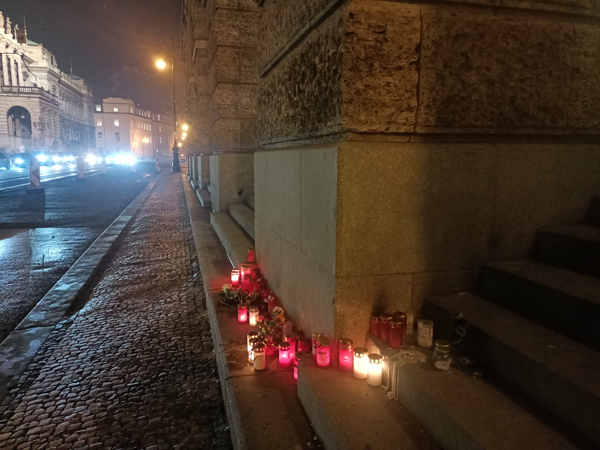
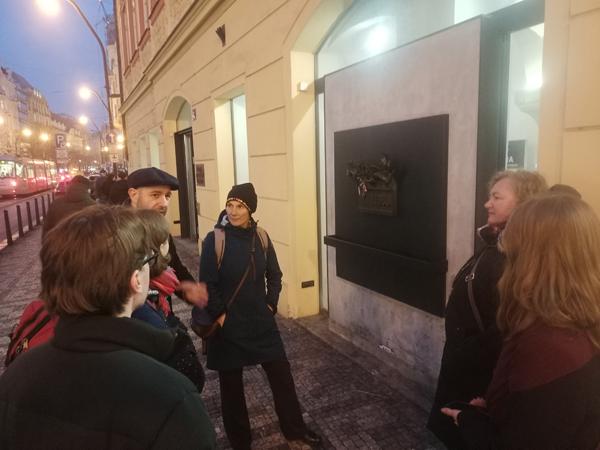
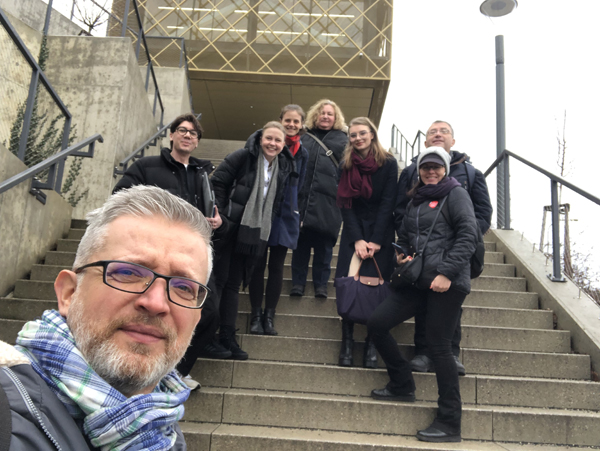
Two-day workshop brought together team members who discussed ongoing achievements of the project. Alessandro Testa, an anthropologist of religion invited participants on the postsecular walk in Prague. All team members actively engaged in works on our book proposal "Toward post-secular memory studies". They presented the drafts of their future book chapters.
PROGRAM
Conference, Warsaw (13-15 June 2024) + pre-conference masterclasses (12 June 2024)
Three-days hybrid conference entitled “Remembrance, Religion and Secularity in Central and Eastern Europe and beyond” which aimed to discuss how religion mobilizes and is mobilized in memory work, and how it affects remembrance processes in Central and Eastern Europe, was a great academic event. The conference was attended by over 50 scholars from several countries, from India to the USA. Particularly visible were representatives of the Visegrad region countries - the Czech Republic, Slovakia, Hungary and Poland, which proves that our regional dialogue is real and resonates with research in the West. In the pre-conference masterclasses participated twelve young scholars from Central Europe and Georgia who presented their fascinating researches on memory and religion. Presentations of the Visegrad team enjoyed great interest. Apart of the panel sessions, there was a plenary session: “Memory, Religion and Post-secularism in Central and Eastern Europe”, and a postsecular memory walk.
The conference was co-organized by the Institute of Ethnology and Cultural Anthropology and the Centre of Figurational Research of the Faculty of Sociology of the University of Warsaw. The event was co-financed under the "Excellence Initiative - Research University" program of the University of Warsaw. The conference partners were the Centre for Research on Social Memory (University of Warsaw), the Working Goup on Lived Religion (Penn State University) and the KFG “Universalism and Particularism in European Contemporary History” (LMU Munich).
RECORDINGS:
Opening speeches
Plenary session: Memory, Religion and Post-secularism in Central and Eastern Europe
CONFERENCE PROGRAM
MASTER CLASSES PROGRAM
POSTER


Project team
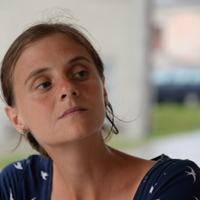
Kamila Baraniecka-Olszewska works in the Institute of Archaeology and Ethnology of Polish Academy of Sciences. She studied ethnology and Latin American studies. Her main areas of interest are the anthropology of religion and performance studies, and in particular forms of religious expression. She received her habilitation in 2019. She is the author of articles on contemporary religiosity, historical reenactments and of the books: The Crucified: Contemporary Passion Plays in Poland (De Gruyter, 2017) and World War II Historical Reenactment in Poland: The Practice of Authenticity (Routledge, 2021). She realizes a project funded by National Science Centre Poland Ambient History: Anthropological Study of Participation in Historical Performances in Poland and participates in a grant funded by Visegrad Fund Post-secular approach to memory processes in Central-Eastern Europe.
Zuzanna Bogumił is cultural anthropologist, working at the Institute of Archeology and Ethnology, Polish Academy of Sciences. She specializes in memory studies, museum studies and anthropology of religion. For last few years Bogumił worked on the religious memory of Soviet repressions in Russia and coordinated the project sponsored by the Polish National Science Centre, “From Enemy to Martyr”. She also conducted research on the historical exhibitions in the Church’s crypts. Bogumił is an author, co-author or co-editor of several books, among them: Gulag Memories: The Rediscovery and Commemoration of Russia's Repressive Past (Berghan Books 2018), Milieux de mémoire in Late Modernity. Local Communities, Religion and Historical Politics (Peter Lang 2019). Memory and Religion from a Postsecular Perspective (Routledge 2022). Her articles have appeared in Europa-Asia Studies, Religion, State and Society, East European Politics and Societies.
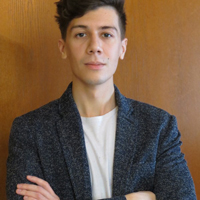
Andriy Fert is a PhD candidate in history at the National University of Kyiv-Mohyla Academy in Ukraine. He currently completes his dissertation dedicated to state control of Orthodox Christian communities of Kyiv in the 1970s-1980s. He studies the interplay between religion, nationalism, and memory, and the role of Churches in memory politics. His publications include “Equivocal Memory: What does the Ukrainian Orthodox Church of the Moscow Patriarchate Remember?” in Religion During the Russian-Ukrainian Conflict (2020) and "‘How could we possibly forget this?’: Ukrainian Orthodox Churches and the Soviet Past during the War" (forthcoming in 2023). Andriy also coordinates several educational projects for secondary school history teachers and studies the impact of the Russian invasion on the Ukrainian Orthodox Church of the Moscow Patriarchate

Agnieszka Halemba (PhD 2003 Cambridge) is a social anthropologists working at the Institute of Archaeology and Ethnology of the Polish Academy of Sciences and teaching at the University of Potsdam. She focuses on the anthropology of religion, with long-term field research conducted in southern Siberia and Transcarpathian Ukraine. Since 2016, she conducts research on the significance of religious architecture in secular contexts based on fieldwork in eastern parts of Germany. She is also a head of the Anthropology Undisciplined Research Unit, which focuses on development of innovative methodologies for interdisciplinary research and an author of two ethnography-based monographs: Negotiating Marian Apparitions: The Politics of Religion in Transcarpathian Ukraine (Central European University Press 2015) and The Telengits of Southern Siberia: Landscape, Religion and Knowledge in Motion (Routledge 2006).
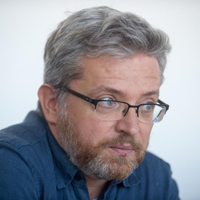
István Povedák has an MA in European Ethnology, History, and Religious Studies from the University of Szeged. He obtained his PhD in Folklore and Cultural Anthropology from the Eötvös Lóránd University of Budapest, in 2009, and received his habilitation in art theory from the Moholy-Nagy University of Art and Design (MOME), Budapest. His research fields include modern mythologies, celebrity culture, conspiracy theories, UFO culture, religious neo-nationalism, ethnic paganism, and Romani culture in Hungary. He is the president of the Hungarian Cultural Anthropology Association. Povedák was the chair of SIEF (International Society for Ethnology and Folklore) Ethnology of Religion Working Group between 2013 and 2019. He has been a guest lecturer at many universities including the Ohio State University, the University of Oregon, and the University of Riga. As a senior researcher he used to work for the Hungarian Academy of Arts, and Charles University in Prague. Since 2018 Povedák is an associated professor at the Institute for Theoretical Studies, MOME.
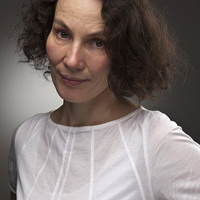
Barbora Spalová has studied ethnology and social anthropology in Prague. She does research in the field of anthropology of religion, particularly the anthropology of Christianity. She is also involved in border studies and memory studies. She lives in the Czech-Polish-German borderland. She is the editor-in-chief of the journal for qualitative research Biograf.
https://cuni.academia.edu/BarboraSpalov%C3%A1
https://cirkev.fss.muni.cz/
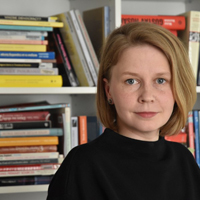
Agáta Šústová Drelová is a contemporary history researcher at the Institute of History, Slovak Academy of Sciences and an author of weekly history podcast at Slovak daily SME. She is the author of several articles and book chapters focusing on religion, national identity and nationalism in late socialist and early post-socialist Czechoslovakia. A University of Exeter and St Andrews graduate, she has been the beneficiary of a number of scholarships including research fellowship at the Imre Kertész Kolleg in Jena. Currently she divides her time between her two children, research and popularisation of history. Within the Post-secular approach to memory processes in Central-Eastern Europe project she will explore the nexus of gender and national identity within post-war Catholic memory in Slovakia.
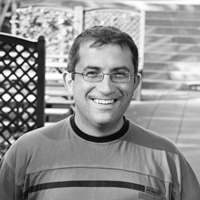
Nikolai Vukov is Associate Professor at the Institute of Ethnology and Folklore Studies with Ethnographic Museum at the Bulgarian Academy of Sciences (IEFSEM – BAS), and Visiting Lecturer in cultural history and social anthropology at Sofia University “St. Kliment Ohridski” and “Paisiy Hilendarski” University of Plovdiv. He has a Ph.D. in anthropology and folklore studies (2002 – Bulgarian Academy of Sciences) and a Ph.D. in modern history (2005 – Central European University, Budapest). Nikolai Vukov has specialized in a number of universities and research centers, including Wissenschaftskolleg – Berlin, Maison des sciences de l’homme – Paris, American Research Institute – Istanbul, and New Europe College – Bucharest. He is author and co-author of several monographs and of more than 120 articles and studies in Bulgaria and abroad. His scholarly interests are related to the anthropology of memory and commemorations; monuments, public rituals, and museum representations; 20th-century cultural history.
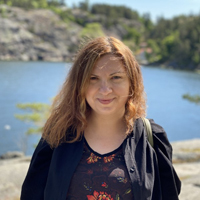
Yuliya Yurchuk is a Senior Lecturer of History at Södertörn University, Sweden. She specializes in memory studies, history of religion, and the study of nationalism in East European countries. She is the author of the book Reordering of Meaningful Worlds: Memory of the Organization of Ukrainian Nationalists and the Ukrainian Insurgent Army in Post-Soviet Ukraine (Acta 2014). Her articles have appeared in Memory Studies, Nationalities Papers, Europe-Asia Studies, Nordisk Østforum, Baltic Worlds, Ukraina Moderna. Her recent work focused on memory and religion. She is one of the editors of “Memory and Religion from a Postsecular Perspective” (Routledge, 2022, co-edited with Zuzanna Bogumil). Currently she is working on the project in the field of the transnational intellectual history titled “From Sweden with Love: Circulation and interpretation of Ellen Key’s ideas about love, motherhood, and upbringing in the late Russian Empire and the early Soviet Union (1890-1930s)” founded by the Foundation for Baltic and East European Studies.
Project partners

Reconstructing the main settlement centres in the northern and western parts of the Lasithi Mountains (Crete) during the Bronze and Early Iron Ages (c. 3100-900 BC) through archaeological reconnaissance, topographical studies and excavation.)
Project information
Research project’s title: Reconstructing the main settlement centres in the northern and western parts of the Lasithi Mountains (Crete) during the Bronze and Early Iron Ages (c. 3100-900 BC) through archaeological reconnaissance, topographical studies and excavation.)
Project No: 2020/39/B/HS3/00820 OPUS-20, ed. 39
Project lead: Krzysztof Nowicki
Project lead, institutional: Institute of Archaeology and Ethnology of the Polish Academy of Sciences
Słowa kluczowe: Grecja, Kreta, Lasithi, epoka brązu, wczesna epoka żelaza, osadnictwo, Karfi
Kontakt: k.nowicki(at)iaepan.edu.pl
Characteristic:
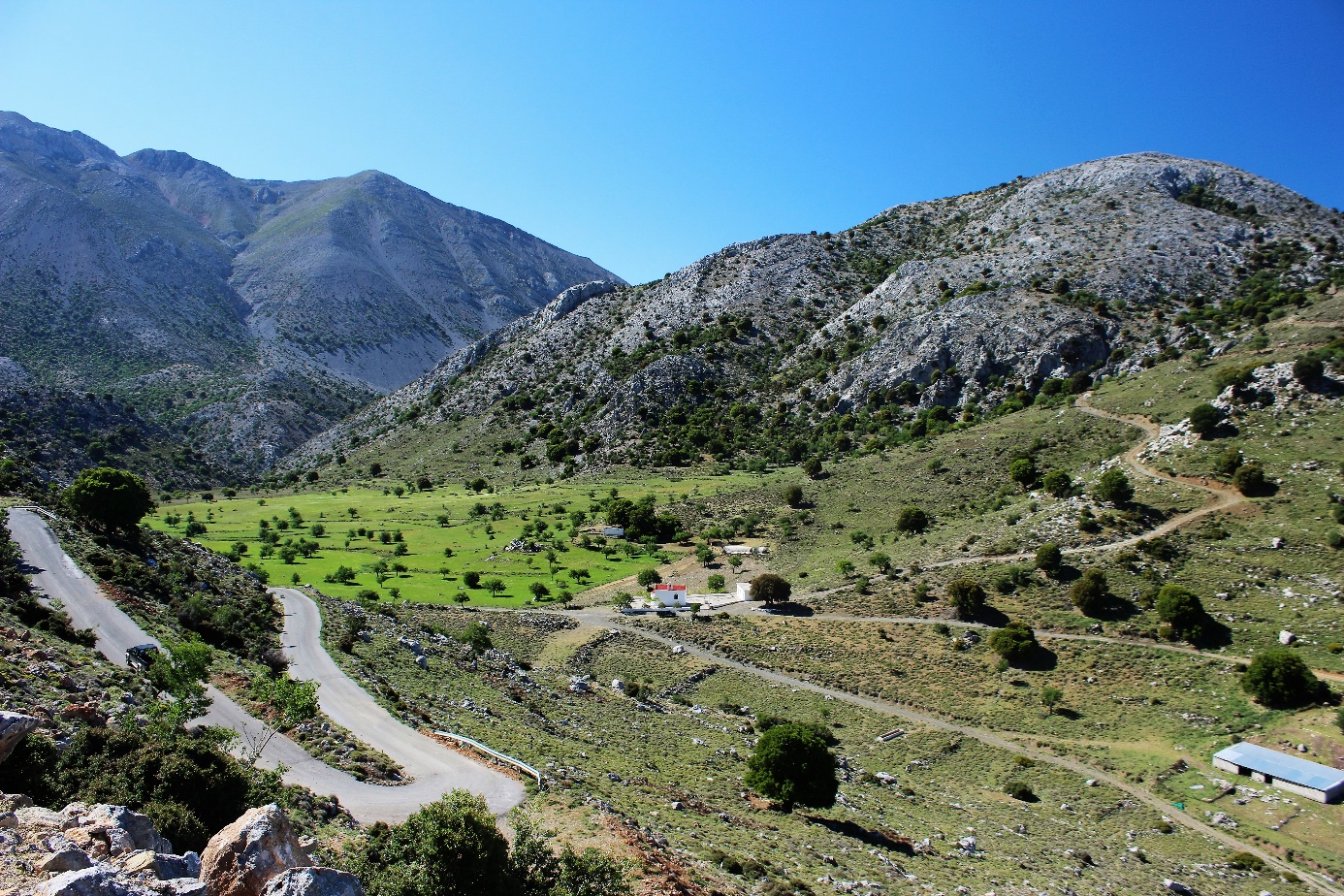
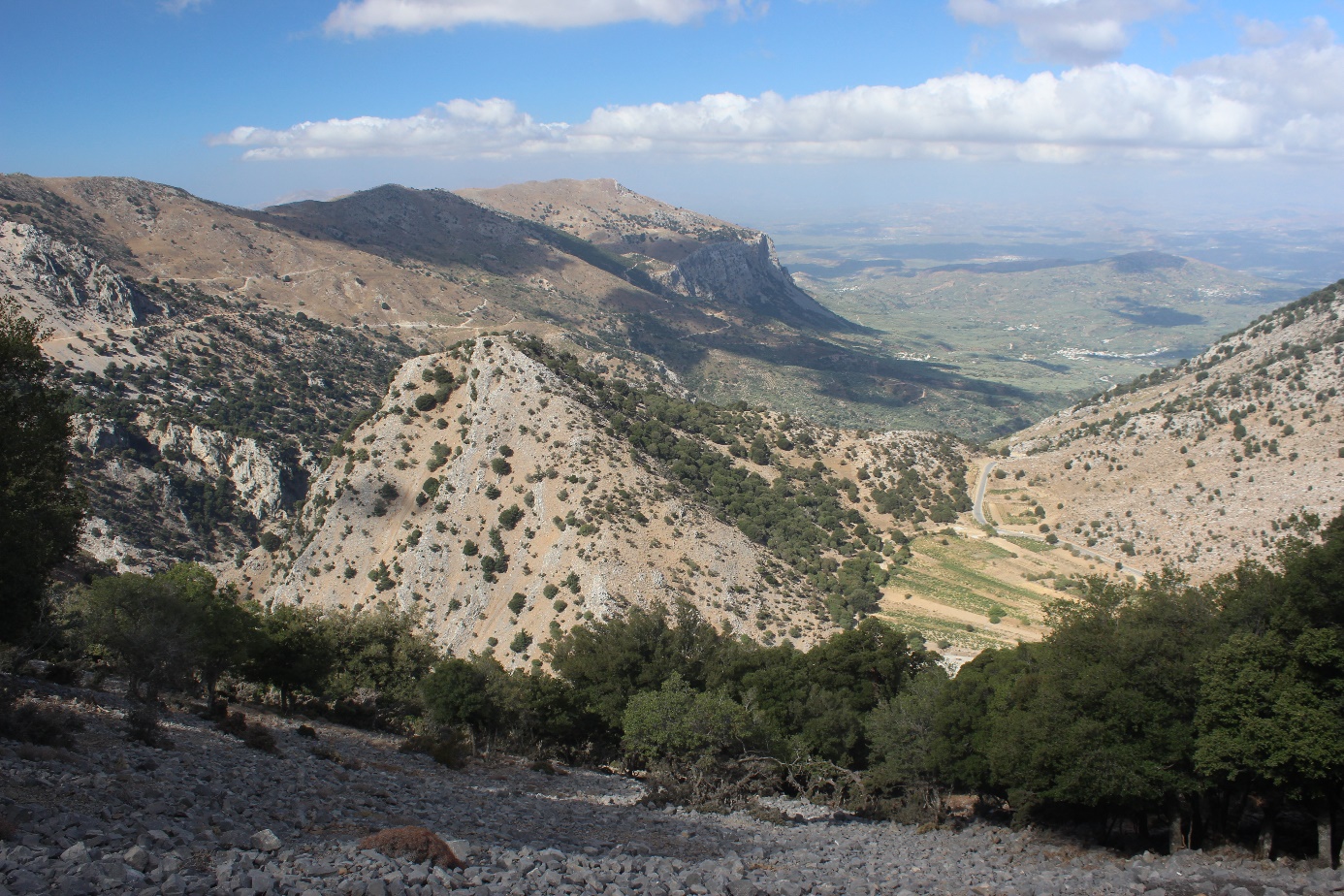
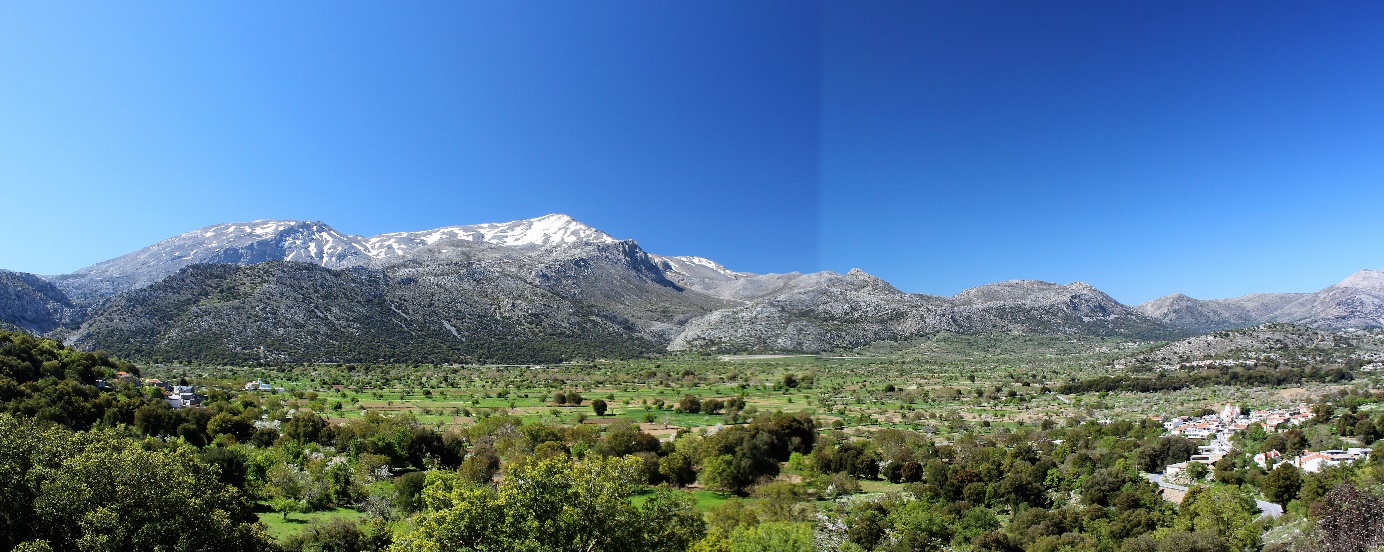
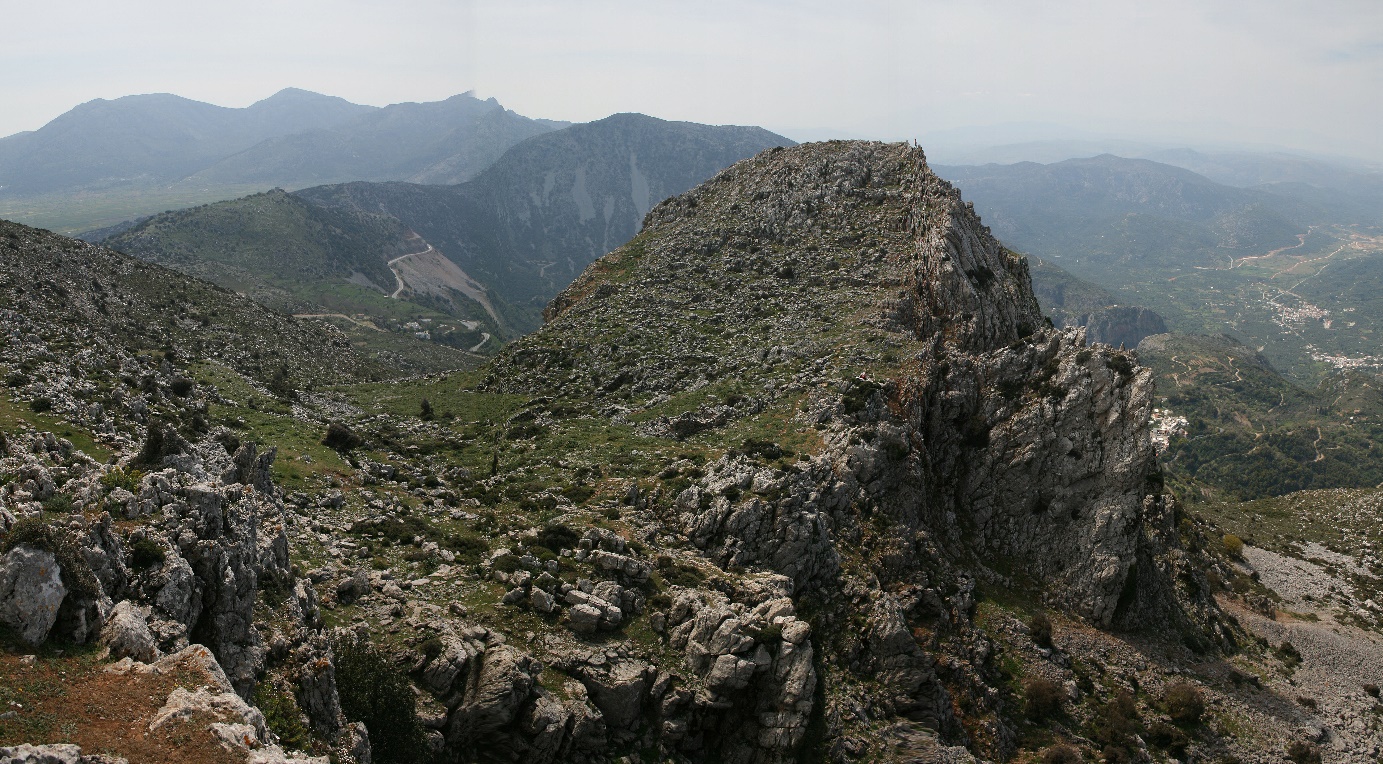
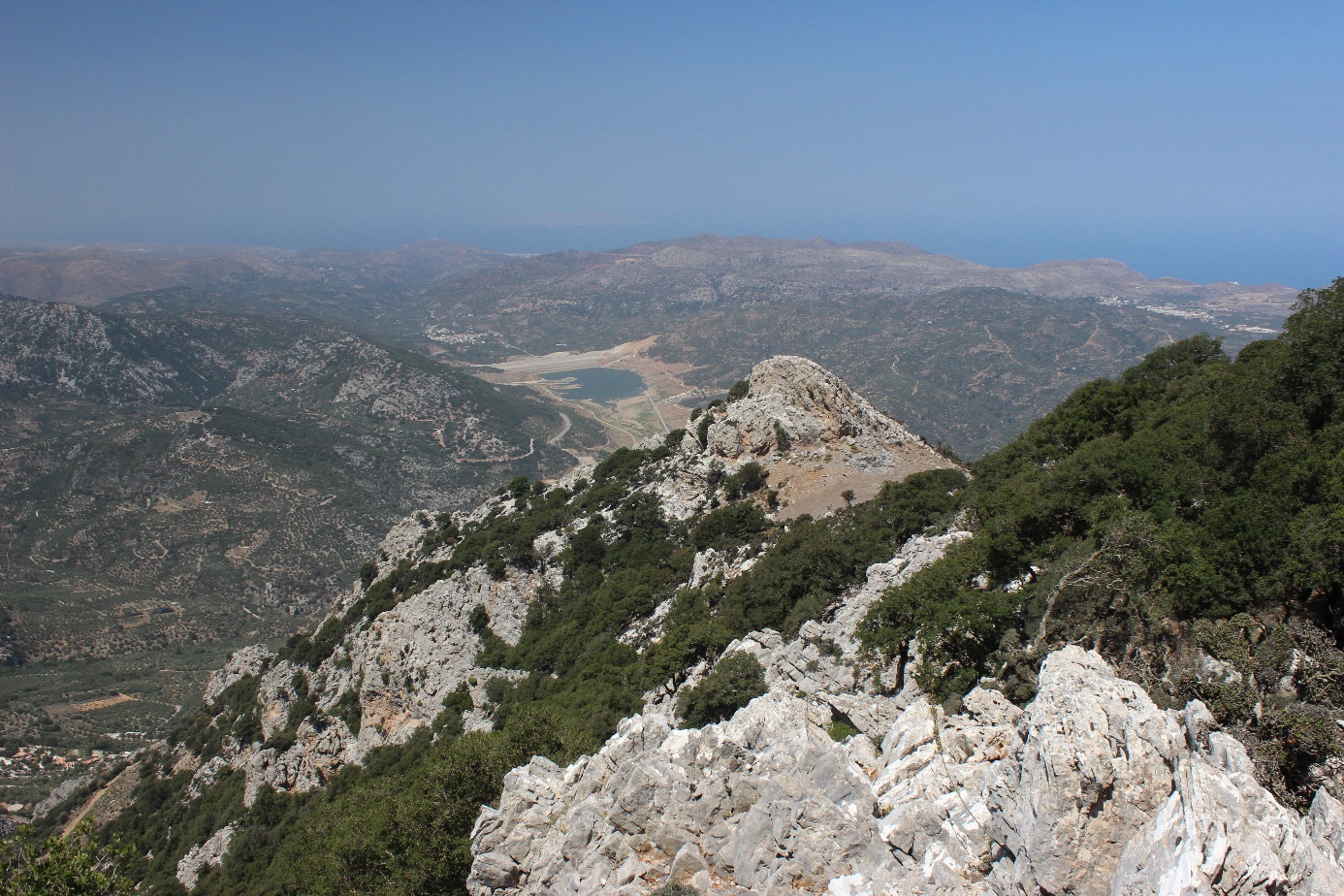
Projekt badawczy dotyczył bogatej historii mieszkańców górskiego regionu centralnej Krety, w tym przyczyn gwałtownych zmian w lokalizacji osad w czasie rozkwitu i upadku tzw. cywilizacji minojskiej, od końca neolitu do wczesnej epoki żelaza (ok. 3100-900 przed Chr.). Góry Lasithi, gdzie prowadzono intensywne badania terenowe w ramach projektu, kryją niezwykle interesujące epizody kreteńskiej historii, od początku zasiedlenia, ok. 5000 r. przed Chr., do wyzwolenia z panowania tureckiego w końcu 19. wieku. W przeszłości góry te, otaczające rozległy płaskowyż i wznoszące się na wysokość od 1600 do 2150 m, stanowiły istotną barierę komunikacyjną i czyniły region największą i najludniejszą naturalną fortecą wykorzystywaną jako obszar refugialny w przypadku inwazji na wyspę lub wybuchu konfliktów wewnętrznych. Każda większa, a szczególnie nagła zmiana systemu osadniczego w górach Lasithi odzwierciedlała dramatyczne wydarzenia i procesy, nie zawsze łatwe do uchwycenia w innych częściach wyspy. Chociaż góry Lasithi były wcześniej okazjonalnie badane przez archeologów, to główne elementy osadnictwa wciąż kryją nieznane epizody historii Krety (np. Karfi - ogromne, tylko częściowo odkopane stanowisko refugialne w regionie), lub są całkowicie ignorowane w pracach na temat cywilizacji minojskiej (np. Agioi Apostoli – jedna z najważniejszych osad epoki brązu na Krecie). Realizacja zaplanowanych celów osiągnięta została przez intensywne archeologiczne prace terenowe obejmujące poszukiwanie, chronologiczną i funkcjonalną identyfikację, dokumentację i rejestrację stanowisk archeologicznych, głównie w pasmach północnym i zachodnim gór Lasithi, mocno izolowanych od współczesnych dróg i wiosek. Analiza zebranych w trakcie projektu informacji topograficznych, materiałów powierzchniowych oraz tych uzyskanych z niezwykle ważnych wykopalisk na stanowisku Karfi, była podstawą do wyjaśnienia historycznych okoliczności powstania poszczególnych ośrodków osadniczych, ich rozwoju i upadku. Szczegółowa analiza sekwencji chronologicznej stanowisk pozwala obecnie określić kiedy i dlaczego osady górskie powstały, skąd pochodzili ich założyciele i dokąd się przenieśli po opuszczeniu gór. Seria stanowisk badanych na północnych stokach Lasithi, powyżej dużego ośrodka pałacowego w Malia, rzuca nowe światło na ekspansję Malia na tereny górskie i reakcję na tę ekspansję ze strony miejscowej ludności w okresie ok. 2100-1700 r. przed Chr. Zrozumienie tego procesu jest bardzo ważne dla rekonstrukcji zmian politycznych na całej Krecie w okresie powstania i wczesnego rozwoju ośrodków pałacowych. Podobne znaczenie miały badania topograficzne i analiza materiału archeologicznego stanowisk w rejonie Agioi Apostoloi, we wschodniej części badanego regionu. Również tutaj odkryte zostało jedno z najważniejszych centrów osadniczych z okresu 2100-1450 przed Chr., reprezentujące sekwencję ekspansji i schyłku osadnictwa w wysoko położonym regionie górskim. Do najważniejszych rezultatów niniejszego projektu należy niewątpliwie zaliczyć wykopaliska na obronnym stanowisku Karfi z okresu załamania się cywilizacji minojsko-mykeńskiej ok. 1200 przed Chr. Chociaż Karfi było częściowo odkopane przez archeologów brytyjskich przed II wojną światową to nasze aktualne prace wykopaliskowe nie tylko odsłoniły całkiem nowe aspekty powstania i zniszczenia tej ogromnej osady zamieszkanej przez ok. 1000 ludzi przez okres 200 lat (1200-1000 przed Chr), ale ujawniły inny – zupełnie nieznany – rozdział historii regionu, a wiążący się z wyżej wspomnianym problemem ekspansji wczesnych ośrodków pałacowych w okresie ok. 1800-1700 przed Chr. Karfi i sąsiednie stanowiska obronne badane w ramach projektu dostarczyły nowych informacji, które pozwolą zrozumieć historyczne uwarunkowania wyboru takiego, a nie innego miejsca przy każdorazowym wycofaniu się ludności do rejonów naturalnie obronnych. Rezultaty projektu pozwolą na istotne skorygowanie dotychczasowej interpretacji wielu procesów historycznych, w tym roli krajobrazu górskiego w ewolucji kreteńskiej religii oraz sekwencji wydarzeń związanych z upadkiem cywilizacji mykeńskiej
A comparative study on Hellenistic and Early Roman fine and semi-fine ware pottery from Nea Paphos and Kourion in Cyprus
Project information
Research project’s title: IMPORTant. A comparative study on Hellenistic and Early Roman fine and semi-fine ware pottery from Nea Paphos and Kourion in Cyprus
Funding: National Science Centre, Poland grant Sonatina 4 no. 2020/36/C/HS3/00068
Project lead: Mgr Małgorzata Kajzer
Project lead, institutional: Institute of Archaeology and Ethnology of the Polish Academy of Sciences
Cooperating Institutions: Department of Antiquities, Cyprus, Fitch Laboratory - British School at Athens
Contact:
e-mail: mkajzer(et)iaepan.edu.pl
Characteristics
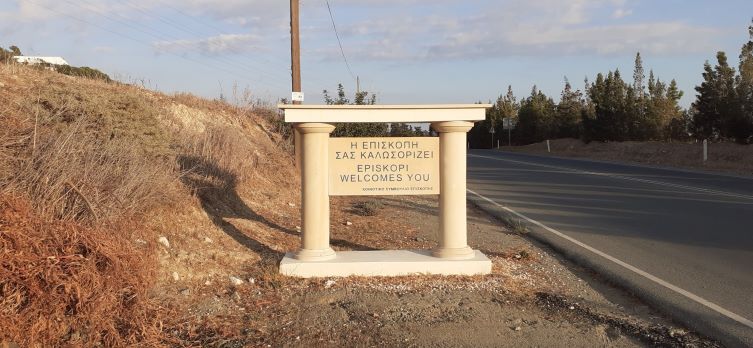
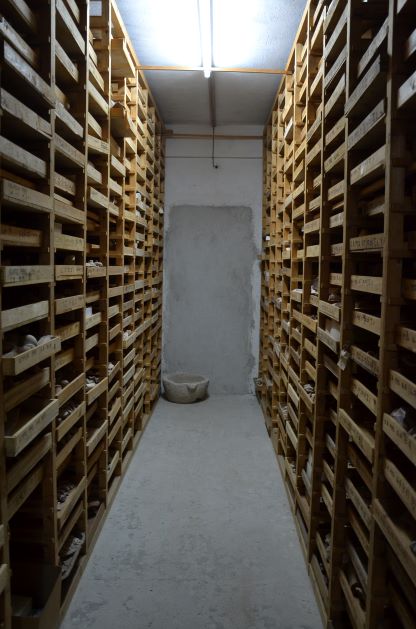
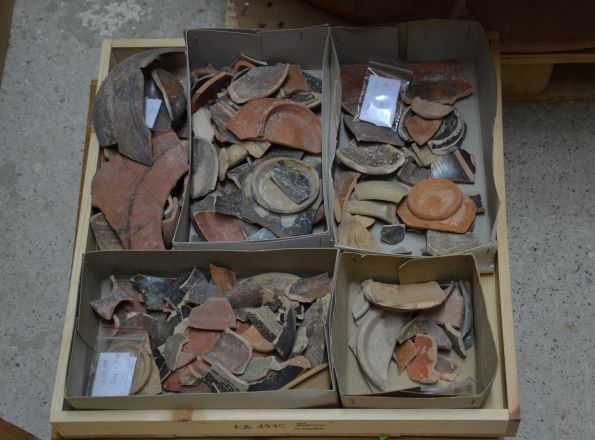
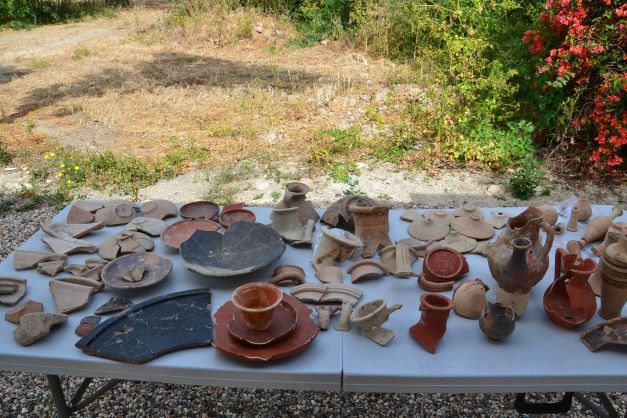
Ceramics, being the most numerous category of movable archaeological material found during excavations, is an important manifestation of the functioning and everyday life of ancient communities. From the archaeologist's point of view, it is an essential tool, helpful in establishing the chronology of archaeological layers due to the variability of the shapes used in particular time periods. However, it was also a crucial element in the distribution of goods, acting as a container for other products or as an object of the trade itself. The latter is the case with fine and semi-fine ceramics, i.e. ceramics made from well-cleaned ceramic masses, which was the most luxurious category of ceramics, including tableware, cosmetic vessels and oil lamps, sometimes imported over long distances. The project is focused on ceramics representing the categories mentioned above, found within the area of two Cypriot port cities - Paphos and Kourion. Both of these centres, located in the south-western part of the island, at a distance of approx. 60 km from each other, performed an important function during the Hellenistic-Roman period (late 4th century BC - 4th century AD). In the case of Paphos, we can even speak of functions as the capital of the island from c. 200 BC. Due to the key role of this city, excavations have been carried out on its territory for years, and the area of the ancient city, a UNESCO World Heritage Site, is an excellent place for archaeological and conservation work. Despite the numerous discoveries, a complete study of the material culture of Paphos is still lacking, especially a study covering imports. The information published so far, based mainly on macroscopic analysis, indicates a diversity of ceramic imports from all over the Mediterranean, reflecting the high status of the city and its inhabitants.
Even less is known about Hellenistic and early Roman Kourion, where works concentrate on the Late Roman period and the moment when the city was destroyed by an earthquake in 365 AD. The proposed project aims to fill this research gap and attempt to reconstruct the supply patterns in both centres, the actual role of Kourion in the period under study and the relationship between the cities. In order to acquire data helping to achieve the research objectives, detailed analysis and comparative study of the ceramics found in both cities will be carried out, with an emphasis on imported tableware ceramics, particularly from outside Cyprus. This will allow for a better understanding of the functioning of the two cities at that time in terms of the distribution of ceramics, reflecting consumer preferences and their social position. The comparative study of imported table ceramics from Paphos, which functions as the capital, and Kourion, whose position is not well recognized, is innovative, also in terms of an integrated methodology combining archaeological and laboratory methods. The detailed macroscopic characterisation (observations carried out with the naked eye or with a magnifying glass) allows to classify the vessels, determine their types and chronology, describe the fabric and thus to define in a fundamental way the production technology and the potential provenance based on published analogies. More precise, scientific methods, on the other hand, allow us to look deep into the analysed material and examine the mineral (petrographic analysis) and chemical composition of the ceramics. This makes it possible to determine the place of manufacture due to the specific geology of individual geographical regions. The laboratory analyses will be conducted in the Fitch Laboratory in the British School at Athens, in the framework of the 6-month internship, planned as an integral part of the project.
More information:
https://polisharchaeologyincyprus.com/en/research/projects/important/

Investigation of the Sources and Uses of Obsidian during the Neolithic in Poland
Project information
Project title: Investigation of the Sources and Uses of Obsidian during the Neolithic in Poland
Project No: NCN OPUS 15 2018/29/B/HS3/01540
Project lead: dr Dagmara H. Werra
Project lead, institutional: Institute of Archaeology and Ethnology of the Polish Academy of Sciences
Project financing: National Science Center
Contact:
e-mail: werra@iaepan.edu.pl
phone (22) 620-28-81 do 86
Project implementation:
Institute of Archaeology and Ethnology of the Polish Academy of Sciences
Characteristics
Obsidian, the volcanic glass, was one of the best quality siliceous rocks utilized by pre-historical societies for making various kinds of tools. Due to its characteristic composition and the content of rare soil elements making for the geochemical "fingerprints", it is possible to determine the attributes characteristic for a given geological source of obsidian by applying various instrumental methods. In effect, we may compare the attributes of obsidian archaeological artefacts in order to determine the most probable place of origin for the raw material of which it had been made.
The project will involve a few analyses, among others carrying out EDXRF analysis. The results obtained allow for interpretations concerning the functioning of past societies in pre-history. It is possible to disclose the issues of access to the obsidian deposits and territory control, specialization, and the use of obsidian. The outcome of such analysis allows in the first line to follow the distribution routes of obsidian artefacts and to study the issues related to its acquiring, exchange and the contacts between communities in pre-history.
The oldest traces of using obsidian by prehistorical societies on Polish lands are dated to the Middle Palaeolithic. In Palaeolithic and Mesolithic, we find single specimens as very rare examples of a more numerous presence of obsidian artefacts (ex. Rydno, ochre mine). A dramatic increase in using obsidian begins with the arrival of the first Neolithic societies to Polish lands.
The goal of the presented project will be to recapture the distribution net of obsidian products and to examine the issues related to its mining, manufacturing, and exchange as practiced by Neolithic prehistorical societies.
The goal will be achieved by applying the technological-morphological analysis in combination with the refitting method and weight analysis. They will be performed in order to find out how the Neolithic communities utilized obsidian. We will find out if in comparison to other raw materials different splitting techniques were applied. These methods will also help to analyze in what form did obsidian reach the site: was it rolled as natural concretions and processed on the site, or did it rather come in form of ready tools or semi-products, and if so – which tools were preferred. At this stage of analysis trace evidence will be performed, in order to determine what was the purpose of obsidian products and whether it was different from the flint tools. Next, we will deal with the analysis of particular specimens, in order to determine the source of origin of the products and their chronology. Planned is a series of X-ray fluorescence analyses (energy dispersive X-ray fluorescence–EDXRF). This is a non-destructive method, which is fit to examine even small specimens. The method allows for determining the characteristic composition of a given specimen and will help to find its source of origin. Planned for the first time for Polish material is also dating of obsidian specimens by hydration. This method allows for determining the specimen chronology. Additionally planned at this stage is radiocarbon dating in order to establish the chronology of sites from which the obsidian originates and which were not dated up till now.
The analysis of such a large obsidian collection will allow for the first time on such a scale to attain a wide image of the distribution and use of this raw material in the Neolithic on Polish lands. In effect, we will obtain a picture of contact dynamics and of exchange in time. The project will also allow examining the issue of specialization and technology of using obsidian, as well as issues related to the scope of utilizing obsidian from particular deposits and how access to it was changing. It will contribute to the development of knowledge on past prehistoric societies – on their mutual contacts and the importance of imported products.
Publications:
Werra, D. H., Hughes, R. E., Nowak, M., Vizdal, M. and Gačková, L. (2021) Obsidian Source Use within the Alföld Linear Pottery culture in Slovakia, Sprawozdania Archeologiczne, 73(1), 331-369. doi: 10.23858/SA/73.2021.1.2615.
Werra, D.H., Woźny, M. and Trela-Kieferling, E. (2022) The investigations of obsidian in Poland – the beginning. In: Walking Among Ancient Trees. Studies in Honour of Ryszard Grygiel and Peter Bogucki. M. Grygiel and P. Obst (eds.), 521-532. Łodź: Wydawnictwo Fundacji Badań Archeologicznych Imienia Profesora Konrada Jażdżewskiego No. 31, Łódź 2022: Fundacja Badań Archeologicznych Imienia Profesora Konrada Jażdżewskiego and Muzeum Archeologiczne i Etnograficzne w Łodzi (alternatively Profil-Archeo Publishing House), ISBN 978-83-948140-9-0.
Kiosak, D., Kotova, N., Demchenko, O., Bardeckyi, A. and Werra, D. H. 2023. Verifying the chronology of Ukrainian Neolithic, Praehistorische Zeitschrift, 98(2), 419-436. https://doi.org/10.1515/pz-2022-2058
Moskal-del Hoyo, M., Korczyńska-Cappenberg, M., Kenig, R., Rauba-Bukowska, A., Roffet-Salque, M., Maule, Ch. A., Werra, D. H., Hughes, R. E., Kapcia, M., Wilczyński, J., Czekaj-Zastawny, A., Głód, A. and Nowak, M. 2024. An Early Neolithic house in the Foothills: A case study of pottery and lithic artefacts from the Biskupice site 18 (Wieliczka Foothills, southern Poland). Journal of Archaeological Science: Reports, Volume 53, 104346. https://doi.org/10.1016/j.jasrep.2023.104346.
Conferences:
International Obsidian Conference 2019, 27–29 May 2019, Sárospatak (Hungary): Dagmara H. Werra, Investigation of the sources and uses of obsidian during the Neolithic in Poland – preliminary review ;
26th EAA Virtual Annual Meeting 24-30 August 2020; Dagmara H. Werra, Richard E. Hughes, Import – gift – equivalent? Investigating the significance of obsidian during the Neolithic in Poland;
International Obsidian Conference 2021; 30.04-02.05.2021; Dagmara H. Werra, Richard E. Hughes, Marcin Szeliga, Geochemical and Technological Characterization of Obsidian Artefacts from the Neolithic Site of Opatów in Southeast Poland;
UISPP XIX World Congress - Meknes; 2-7.09.2021; Dagmara H. Werra, Marzena Woźny, Siliceous rocks mining, using and identification -short overview of a history of archaeological friendship between humanities and natural sciences;
27th EAA Annual Meeting (Kiel Virtual, 2021);6-11.09.2021; Dagmara H. Werra, Richard E. Hughes, Mark Nowak, Marián Vizdal, Lýdia Gačková; Alföld Linear Pottery Culture Communities in Eastern Slovakia (the North-Eastern Carpathian Basin) in the Light of Obsidian Source Use;
Summer School of Archaeology 2022, August 22–26, 2022; Eastern Slovakia, Tokaj Region; Dagmara H. Werra, Piotr Werens; Let's make tools not war. On the sources and uses of obsidian by prehistoric communities; https://www.castrum-zemlun.site/;
28th EAA Annual Meeting (Budapest, 2022); 31 August - 3 September 2022; Dagmara H. Werra, Marcin Szeliga, Katarzyna Pyżewicz; Value, Significance and use of ‘exotic’ materials – in view of the presence of obsidian on Neolithic sites in Poland;
7th Arch_RNT Archaeological Research & New Technologies, Kalamata, Greece,6 to 8 October 2022; M. Moskal-Del Hoyo, A. Rauba-Bukowska, R. Kenig, M. Roffet-Salque, C. Maule, D. H. Werra, M. Nowak, A. Czekaj-Zastawny and M. Korczyńska; A study of pottery and obsidians from an Early Neolithic house in the foothills: A case study of the Biskupice Site 18 (Wieliczka Foothills, Southern Poland);
29. stretnutie východoslovenských archeológov v Zemplínskom Múzeu v Michalovciach; 23 listopada 2022, Michalovce, Słowacja; Dagmara H. Werra, Richard E. Hughes, Marek Nowak, Marián Vizdal and Lýdia Gačková; Pochodzenie zabytków obsydianowych z wybranych stanowisk wczesnego neolitu na wschodniej Słowacji;
Przeszłość ma przyszłość! / The Past Has a Future! 4. Konferencja naukowa Wydziału Archeologii Uniwersytetu Warszawskiego (13-17.03.2023); Dagmara H. Werra, Marcin Szeliga, Katarzyna Pyżewicz: Pochodzenie i wykorzystanie obsydianu w neolicie ziem polskich – na przykładzie materiałów z Opatowa, Polska południowo-wschodnia;
International Obsidian Conference, 3-6 July 2023, Metroplaza (Engaru Town), Japan; Dagmara H. Werra, Marcin Szeliga, Richard E. Hughes, and Rafał Siuda: Technological analysis and geochemical characterization of obsidian artefacts from the Neolithic sites from Poland: An overview; Dagmara H. Werra, Katarzyna Pyżewicz, and Jolanta Małecka-Kukawka: The use of obsidian by Neolithic communities in the light of the use-wear analysis: A few observations from Poland;
XXth UISPP World Congress, September 5-9, 2023 West University of Timișoara, Romania; Dagmar H. Werra, Anna Sokólska-Majchrzak: Differentiation of siliceous rocks used by Final Paleolithic communities in the Vistula River basin; Dagmar H. Werra: Relationship between the settlements and the outcrops in the light of the extraction, exchange, and use of obsidian;
XXXVIII Lubelska Konferencja Badania Archeologiczne w Polsce: Środkowowschodniej, Zachodniej Białorusi i Ukrainie, Lublin-Zamek, 6-7 listopada 2023 r.; Dagmara H. Werra, Marcina Szeliga, Katarzyna Pyżewicz, Richard Hughes: Neolityczny inwentarz obsydianowy z Opatowa w świetle wyników najnowszych analiz technologicznych, funkcjonalnych i geochemicznych;
They write about us:
Nauka w Polsce: Szymon Zdziebłowski, "Smocze szkło" na terenie dzisiejszej Polski było znane już ponad 20 tys. lat temu
Facebook:
XXth UISPP World Congress, September 5-9, 2023 West University of Timișoara, Romania
THE PAST SOCIETIES. Polish lands from the first evidence of human presence to the Early Middle Ages
Project information
Project title: THE PAST SOCIETIES. Polish lands from the first evidence of human presence to the Early Middle Ages
Project No: 11H 11 0186 80
Project lead: Prof. dr hab. Przemysław Urbańczyk
Project lead, institutional: Institute of Archaeology and Ethnology of the Polish Academy of Sciences
Project financing: Research financed within the National Humanities Programme, a project of the Ministry of Science and Higher Education, in 2012–2015
Contact:
e-mail: uprzemek@iaepan.edu.pl
phone (22) 620-28-81 do 86
Project implementation:
Institute of Archaeology and Ethnology of the Polish Academy of Sciences
Characteristics
The aim of the project is to write and publish a synthesis of the prehistory of Polish lands in English. It will be an up-to-date compendium of knowledge on cultural processes in the period from more than 0.5 million years ago, when the first settlers came to these lands, to the establishment of a stable state organization which around the year 1000 became an integral part of Latin Europe. In recent years, due to intensified excavations throughout the country, there has been a rapid increase in the number of new archaeological finds that led to many, often revelatory discoveries. There have been also considerable changes in archaeological research methods. They have been partly due to the development of the theoretical basis and methodological perspectives in the field which provided a new insight into both social and historical processes as well as the classification and chronology of available sources. Furthermore, our knowledge on all historical periods has fundamentally changed since “The Prehistory of Polish Lands” (1975-1979) was published. A new synthesis of the prehistory of Polish lands should go beyond offering a potential new classification and chronology of the past events and take up the challenge of presenting a new interpretation of this distant past. The resulting monograph will be addressed both to archaeologists and to representatives of other disciplines (mainly historians). The final result of the project will be a 5-volume book in English. It will be published as well in an electronic version (e-book).
Golden apple Polish archeology
Project information
Project title: Golden apple Polish archeology. Teams castles in Czermno and Gródek (Red Cities) - chronology and function in the light of ancient and verification
Project No: 12H 12 0064 81
Project lead: dr hab. Marcin Wołoszyn
Project lead, institutional: Institute of Archaeology and Ethnology of the Polish Academy of Sciences
Project financing:Research financed within the National Humanities Programme, a project of the Ministry of Science and Higher Education, in 2012–2015
Contact:
e-mail: marcinwoloszyn@gmail.com
phone/fax 12 422-29-05
Project implementation:
Institute of Archaeology and Ethnology of the Polish Academy of Sciences – Warsaw
Institute of Archaeology of the Jagiellonian University – Krakow
Institute of Archaeology Maria Curie-Sklodowska University - Lublin
Institute of Archaeology Rzeszów University - Rzeszów
Institute of Ethnology and Cultural Anthropology, University of Warsaw
Department of Anthropology Sciences - Wroclaw
Museum of Zamosc
Geisteswissenschaftliches Zentrum Geschichte und Kultur Ostmitteleuropas – Germany
Institute of History of Material Culture, Russian Academy of Sciences - Russia
Institute of Archaeology, Serbian Academy of Sciences - Serbia
University of Florida – USA
Institute of Ethnology. National Academy of Sciences of Ukraine
Lesser Clergy in medieval Silesia. Prosopographical Analysis of Clerics in Nysa 1250 - 1550
Project information
Project title: Lesser Clergy in medieval Silesia. Prosopographical Analysis of Clerics in Nysa 1250 - 1550
Project No: 2014/13/B/HS3/04932
Project lead: dr Ewa Wółkiewicz
Project lead, institutional: Institute of Archaeology and Ethnology of the Polish Academy of Sciences
Project financing:National Science Center, 2014-2016
Contact:
e-mail: ewawolkiewicz@op.pl
phone (22) 620-28-81 do 86
Project implementation:
Institute of Archaeology and Ethnology of the Polish Academy of Sciences
Characteristics
Project information
1. Research project objectives/ Research hypothesis
The aim of the project is to examine the functioning of the social group of lower clergy in late medieval Silesia. In previous studies on the clergy as a social group this particular subcategory was taken into account into relatively marginal extent. Existing studies focused mostly on the prosopographical analyses of upper class clerics - i. e the episcopate as well as members of cathedral and collegiate chapters. Therefore, to recognize properly a role of the clergy and its impact on laic milieu in a medieval town, it seems important to focus on a group of parsons, vicars and other numerous representatives of the lower clergy on the parochial level. Despite the emergence of several prosopographical works on the lower Silesian town clergy in recent years many threads of research has not yet been adequately developed in the synthesizing form. The most important of these issues seems to be undoubtedly a matter of literate practice and mentality of late medieval clergymen. Preserved literary sources provide a convenient opportunity to complement existing knowledge on forms of written communication in the aforementioned period. An important issue to be raised of the project is also a verification of the thesis concerning the progressive impoverishment of the lower clergy group in the late fifteenth century, which may have contributed to numerous accession of this "ecclesiastical proletariat" to the ideas of the Reformation.
Research field for such outlined issues will be mainly late medieval Nysa (Neisse), which primarily justifies a relatively abundant source database providing types of records unique across Central Europe. The town of five thousand inhabitants which can serve as a an example of a typical medium-sized urban settlement in Silesia is also a convenient starting point for further research of other localities. The chronological framework of the project is on the one hand the first half of the thirteenth century, when the earliest attested mention of the clergy in Nysa emerged, and the second half of the sixteenth century, when the city was strongly influenced by the Reformation movement. Such a broad chronological perspective allows to trace also biographies of the priests who were ordained before 1517, and by means of that a complex confessional situation in the second quarter of the sixteenth century.
2. Research project methodology
A study on the lesser clergy in the late Middle Ages requires a comprehensive archival research covering archival collections both urban, as well as ecclesiastical provenance. Due to the dispersion of the archives the queries in Poland, the Czech Republic and Germany will be necessary. Very important is also a detailed analysis of papal documents - relating both to bestowals of benefices, as well as documentation of the Apostolic Penitentiary, including cases of offenses committed by clergy. For comparative context it will be necessary to collect secondary literature on the subject, especially for the area of the German Reich, the Czech Crown and the Polish Kingdom. Preparing a comprehensive catalogue of clergy allows the framing the aforementioned social group with prosopographical and statistical methods.
3. Expected impact of the research project on the development of science, civilization and society
The project will examine the important group of medieval society, which remains as so far not accurately recognized even in Western literature. The basis of the research will be unpublished archival sources, not used before in the study. The results will be published in a monograph combined with a biographical catalogue of the analyzed group. It is also planned to prepare a paper presenting the main findings of the research in English. The collected data can be used not only for the study of social history, but also the future development of the late medieval genealogy. Work will also provide an important contribution to the study of late medieval literate mentality and history of the Church.
Textile production in Bronze Age Greece – comparative studies of the Aegean weaving techniques
Project information
Project title: Textile production in Bronze Age Greece – comparative studies of the Aegean weaving techniques
Project lead: Dr Agata Ulanowska
Project financing: FUGA. Post-doctoral internship of the National Science Centre in Poland
Contact:
e-mail: a.ulanowska@uw.edu.pl
Project implementation
Institutions involved:
Centre for Research on Ancient Technologies in Łódź
Researchers involved:
dr Agata Ulanowska - Post-Doc
Prof. dr hab. Jerzy Maik - Supervisor
Characteristics
Research objectives:
The main objective of the research project "Textile production in Bronze Age Greece – comparative studies of the Aegean weaving techniques" is to investigate the level of technical advancement and specialization of textile craft in Greece in the third and the second millennia BCE.
Textile production has been one of the key crafts in the Aegean Bronze Age because of its complex and time-consuming technology, high level of direct involvement of society in all operational sequences of production and economic and symbolic importance of textiles. However, the overall level of the specialization of textile craft has not yet been approached from the technical angle, being though intensively analyzed in terms of various professional designations of textile workers recorded in Linear B archives of Mycenaean palaces.
In my project I aim to fill up this gap by investigating and defining textile techniques of the Aegean Bronze Age and, subsequently, by evaluating the level of their technical advancement, standardization, and by characterizing specialist requirements of a necessary equipment.
My aims will be achieved by completing a series of research tasks, described as following:
1. Comparative studies of Bronze Age archaeological textiles.
In this task parameters and structure of archaeological textiles from Bronze Age Greece will be compared with technical parameters of other textiles from Bronze Age archaeological contexts which have been produced from similar fibres, such as wool and flax and by use of similar implements, such as the warp weighted loom.
A piece of experimentally woven fabric of parameters coping the structure of three fragments of an archaeological textile from the shaft grave N of Circle B in Mycenae (National Archaeological Museum of Athens, catalogue numbers 8591, 8592 & 8589) will be executed and evaluated in terms of its technical requirements.
2. Investigating the techniques of use of textile tools and evaluating specialization or multi-functionality of tools; mapping their spatial and diachronic distribution patterns
Technical analysis of the functionality of textile tools in advanced weaving techniques.
Comparative studies of specialized implements from Bronze Age Greece and Anatolia.
3. Investigating iconography of textile weaves and patterns in Aegean art; reconstruction of weaving and decoration techniques based on the imagery of textiles.
Examining imagery of patterns and weaves.
Technical and aesthetic evaluation of experimentally woven samples of textile patterns and weaves executed to imitate the iconographic motifs.
4. Comparative studies of ergonomics of weaving techniques; examining of the level of standardization or specialization of weaving technology.
Innovative aspects and research outcomes of the project:
The research results of the project will contribute to our knowledge about textile technology and fabrics produced in Bronze Age Greece and they will introduce a novel data into academic discourse about the level of specialization of textile craft in the Aegean cultures. The results will particularly enhance the following new horizons in the research:
New prospects in studies on organization and specialization of textile production in Bronze Age Greece.
Broader comparative approach to textile technology including new experimentally generated analogies.
Deeper understanding of the materiality of culture by linking up reconstructed textile techniques and archaeologically preserved tools.
Deeper understanding of textile technology and socio-cultural position of textile workers, including the substantial role of women in textile craft.