



AKTUALNOŚCI
Warning: Attempt to read property "ID" on int in /home/platne/serwer286960/public_html/iaepan.edu.pl/wp-content/themes/prospel/category.php on line 14

Man and his environment - natural conditions
Project information
Project title: Man and his environment - natural conditions nad nature of the anthropopressure on the Poland's and Pomeranian's borderland in the Early Middle Ages in the light of geoarchaeological studies of the settlement complex in Santok
Project No: 11H 11 0184 80
Project lead: dr Kinga Helena Zamelska-Monczak
Project lead, institutional: Institute of Archaeology and Ethnology of the Polish Academy of Sciences
Project financing:National Science Center, 2014-2016
Contact:
e-mail: kinga.zamelska@iaepan.poznan.pl
phone (22) 620-28-81 do 86
Project implementation:
Institute of Archaeology and Ethnology of the Polish Academy of Sciences
National Institute of Geology (Pomeranian Branch in Szczecin)
Characteristics
1. Research project objectives/ Research hypothesis
The aim of the project is to learn about the natural environment in north-western Great Poland before settlement occupation in the region in the early Middle Ages and investigation of taking place in this period the mutual relations man - environment. The planned within the framework of tasks integrated, interdisciplinary, geoarchaeological research provide insights into the environmental conditions that prevailed on the borderland between Great Poland and Pomerania, especially along the valley of the Warta and Noteć River, indicate the size and scale of anthropopression, the nature of the activity of contemporary communities in evolution of the landscape and adapting it to their functions.
Although natural landscape research in Great Poland has a long tradition, so far they spared this part of the region. Research work is scheduled for the the area at the confluence of the Warta and Noteć River where the settlement center in Santok was located. Due to its location, the certified written and archaeological sources and several hundred years of settlement's history (VIII-XV cent.) evolving in terms of functionality (trading post - Piast center city - a medieval village) - Santok could become a crucial site to know the environment of human life in the Middle Ages. The result of the project will be so precise analysis of environmental conditions in which inhabitants of borderland Great Poland and Pomerania acted and the cultural and environmental transformations occurring in this area in the early Middle Ages.
2. Research project methodology
Realization of the project and the achievement of the goals is based on the use of the abilities and experience of sciences in the field of geomorphology, geology, geochemistry, sedimentology, palynology and paleontology, integrated with archaeological research. The schedule includes fieldwork focused to obtain a data and material for further studies, specialized analyzes and interdiscipline joint research results. The series of drilling and geophysical recognition will be done by specialists of natural sciences The stronghold and its surrounding, that area will be tested by the archaeological field prospection and excavation survey.
All the works will be documented, materials studied currently and the results interpreted collectively. Exposed samples will be tested in laboratory: sedimentological, palynological, paleontological, geochemical, diatomological, dendrochronological analysis, radiocarbon datings. The choice of such methods of analysis was made after the initial geological exploration by drilling on the site. Archaeological studies will be carried out according to standard methods, with particular consideration of the stratigraphic correlation within the entire settlement complex and chronology of settlement levels. Use of the cartographic data and aerial photography is also planned and spatial data location positions for detailed identify surroundings of the settlement Santok.
The realization of works is planned for 36 months.
3. Expected impact of the research project on the development of science, civilization and society
The result of the carried out research will be extended and intensified knowledge of the interaction between human occupation and the environment in the early Middle Ages on the geographical borderland of Great Poland and Pomerania, territory has not included so far to such studies . It will fill the existing gap in recognizing an extremely significant in the history of Polish territories the area iof north-western Great Poland The image of primary natural conditions and the nature and scale of anthropopression enables to define unique in the region, located within the interior emporium in Santok.
The results of the research will be the basis for further work on the analysis of natural landscape where the settlement was developing on the borderland between both regions, in the valley of the Warta-Noteć River.
Multidisciplinary nature of the proceedings of allows the use of obtained data, both in source works concerning examined area, as well as synthesis works presenting the analyzed issues in a wider context, both from the the humanities and the natural sciences. Investigators of the project are convinced that Santok - an important place in history, will also be a reference point and correlation of natural and cultur occurrences acted in the past. All the data and research results will be collected and compiled in the form of of the final elaboration (manuscript), supplemented with a set of illustrations - drawings, photographs, diagrams. A specially prepared website will be presented information on current events and ongoing work.
This website will also be designed for popularization of geoarchaeology and informing about the whole range of methods and techniqes enabling to learn the past natural landscape . The results of research will be published in journals with a profile on both fields: archeology and the natural sciences. The long-term intention achieved research results will provide the necessary basis for preparing the planned, comprehensive monograph of the region distributed in the international circulation.
Warning: Attempt to read property "ID" on int in /home/platne/serwer286960/public_html/iaepan.edu.pl/wp-content/themes/prospel/category.php on line 14
EPIGONES AND FORERUNNERS - ADAPTATION STRATEGIES OF THE SUBSAHARAN SOCIETIES IN TERMINAL PLEISTOCENE AND EARLY HOLOCENE
Project information
Project title: EPIGONES AND FORERUNNERS - ADAPTATION STRATEGIES OF THE SUBSAHARAN SOCIETIES IN TERMINAL PLEISTOCENE AND EARLY HOLOCENE. Case study of the region of Affad Basin, Southern Dongola Reach, Sudan
Project No: UMO-2015/18/E/HS3/00416
Project lead: dr Marta Osypińska
Project lead, institutional: Institute of Archaeology and Ethnology of the Polish Academy of Sciences
Project financing:National Science Center, 2014-2016
Contact:
e-mail: archeozoo@O2.pl
phone (22) 620-28-81 do 86
Project implementation:
Institute of Archaeology and Ethnology of the Polish Academy of Sciences
Characteristics
1. Research project objectives/ Research hypothesis
First stage of the research in Sudanese Southern Dongola Reach financed by National Center of Science (UMO-2011/01/D/HS3/04125) inscribed into Polish tradition of studies on prehistory of the North-Eastern Africa. Since 2012 the area of Affad was a place of field works known as the "Levallois Tradition Epigones in the Middle Nile Valley" project. Number of unique data of Terminal Pleistocene and Early Holocene settlement was available due to the three-years works - relics of cut features (postholes, pits, hearths), rich assemblages of animal remains and one of the latest stone industry rooted in the Levallois traditions. Riverine plains - few kilometers away ofnowadays Nile presents numerous relics ofsettlement sealed within silts related with Terminal Pleistocene river alluviation c.16 thousands years ago. Also later sediments (Early Holocene) produced settlement remains rich in osteological materials that enable the adaptation strategy evaluation of first demographically and socially advanced societies by the Nile.
Research project objectives/ Research hypothesis
The principal objective of the proposed project is evaluation of the different adaptation strategies formation at the Terminal Pleistocene and Early Holocene societies. Preliminary hypothesis assumes substantially different models of the environment exploitation in both periods while the fauna composition, geomorphology and hydrology suggest identical or very similar ecozones settled within the microregion of Affad Basin. Comprehensive analysis of the both excavated and new locations within the meaning ofpalaeoenvironmental studies (including also magnetometric survey and absolute datings apart archaeozoological and geomorphological data) allow a high resolution model of the land formation analyzing. The main research problem to be solved is to find and evaluate particular factors driving adaptation models of Middle Palaeolithic and Mesolithic/Early Neolithic. The complex of archaeological sites at Affad Basin gave the unique possibility to search the subject due to preservation of stratified and secure archaeological evidence of both periods. Diversity of the adaptation strategies as a combination of relations between human culture and environment were not previously analyzed in the Middle Nile Valley, but can accelerate discussion upon very long lasting persistence of Middle-Paleolithic in sub-Saharan Africa and late appearance of socially and demographically advanced societies in the region.
2. Research project methodology
The unique character of Affad sites embrace secure stratigraphic evidence enabling to define the camps size and its spatial organization, pointing the functional diversity of sites and detailed analysis of lithic industries including functional approach. Similar potential concerns animal remains as a source of data for palaeoenvironmental studies, defining hunting/gathering strategies and the meet processing (food conservation and preparation). Also Early Holocene sites produce additional correlates of material culture - pottery and domesticated animals remains (ready to be analyzed through their isotopic composition toward evaluation of the animals diet and migrations). Wide spectrum of planned analyses includes also OSL sediments dating, radiocarbon dating of Neolithic remains, Electron Spin Resonance dating of the teeth, Digital Elevation Model (DEM) creation for the GIS analysis, magnetometric survey of selected areas and petrographic analysis of sediments for the buried topography reconstruction, working on comparative collections ofAfrican mammals and fishes in Belgium and Kenya as well as experimental procurement and usage the stone tools of local raw material for functional analysis.
3. Expected impact of the research project on the development of science, civilization and society
Taking into account multispectral approach and range of the project, it should be perceived as innovative way of research on prehistory ofAfrica. The project results will greatly influence on the development ofglobal knowledge ofearly history of human culture, especially adaptation strategies of societies related to the Middle Palaeolithic and its long survival in Sub-Saharan Africa. Not less important can be results ofthe Early Holocene societies studies inhabiting Affad as a slightly delayed forerunners of new adaptation model. African Neolithic origins (e.g. domestication of African species instead of influx of Near Eastern animals) is still a subject of international debate.
Proposed research project could also affect much wider scientific debate concerning global climatic changes and human adaptations models.
Warning: Attempt to read property "ID" on int in /home/platne/serwer286960/public_html/iaepan.edu.pl/wp-content/themes/prospel/category.php on line 14
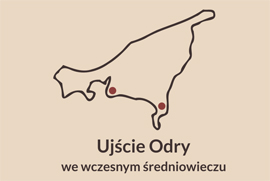
The estuary of the Oder River in the early Middle Ages
Project information
Project title: The estuary of the Oder River in the early Middle Ages. Wolin and Lubin - edition of archaeological sources
Project No: 11H 12 0328 81
Project lead: Prof. dr hab. Marian Rębkowski
Project lead, institutional: Institute of Archaeology and Ethnology of the Polish Academy of Sciences
Project financing: Research financed within the National Humanities Programme, a project of the Ministry of Science and Higher Education, in 2012–2015;">
Contact:
e-mail: m.rebkowski@iaepan.szczecin.pl
telefon 91 433 69 13
Project implementation:
Institute of Archaeology and Ethnology of the Polish Academy of Sciences
University of Szczecin
Warning: Attempt to read property "ID" on int in /home/platne/serwer286960/public_html/iaepan.edu.pl/wp-content/themes/prospel/category.php on line 14
Archeo-database
Project information
Project title: Archeo-database. Digital archive of Archaeological Research and Rescue Team in Wroclaw
Project No: 11H 13 0214 82
Project lead: Prof. zw. dr hab. Bogusław Antoni Gediga
Project lead, institutional: Institute of Archaeology and Ethnology of the Polish Academy of Sciences
Project financing: Research financed within the National Humanities Programme, a project of the Ministry of Science and Higher Education, in 2012–2015;">
Contact:
e-mail: bge@arch.pan.wroc.pl
phone (22) 620-28-81 do 86
Project implementation:
Institute of Archaeology and Ethnology of the Polish Academy of Sciences
Institute of Archaeology Wroclaw University
Warning: Attempt to read property "ID" on int in /home/platne/serwer286960/public_html/iaepan.edu.pl/wp-content/themes/prospel/category.php on line 14
Sylloge Nummorum Graecorum Poland
Project information
Project title: Sylloge Nummorum Graecorum Poland. History of Polish coin collection of ancient Greece and the development and publication of collections
Project No: 1aH 15 0195 83
Project lead: Prof. dr hab. Mariusz Kazimierz Mielczarek
Project lead, institutional: Institute of Archaeology and Ethnology of the Polish Academy of Sciences
Project financing: Research financed within the National Humanities Programme, a project of the Ministry of Science and Higher Education, in 2012–2015
Contact:
e-mail: mielmar@umk.pl
phone (22) 620-28-81 do 86
Project implementation:
Museum of Archaeology and Ethnography in Lodz
National Museum in Krakow
National Museum in Warsaw
Regional Museum in Torun
Warning: Attempt to read property "ID" on int in /home/platne/serwer286960/public_html/iaepan.edu.pl/wp-content/themes/prospel/category.php on line 14
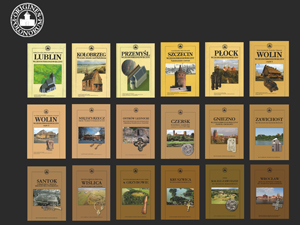
Continuation of the series "Origines Polonorum"
Project information
Project title: Continuation of the series "Origines Polonorum"
Project No: 1aH 15 0272 83
Project lead: Prof. dr hab. Przemysław Urbańczyk
Project lead, institutional: Institute of Archaeology and Ethnology of the Polish Academy of Sciences
Project financing: Research financed within the National Humanities Programme, a project of the Ministry of Science and Higher Education, in 2012–2015;">
Contact:
e-mail: uprzemek1@poczta.onet.pl
phone (22) 620-28-81 do 86
Project implementation:
Institute of Archaeology and Ethnology of the Polish Academy of Sciences
UAM Poznan
Archaeological Museum in Gdansk
Museum of the Origins of the Polish Gniezno
Museum of the First Piast in Lednogóra
Wawel Royal Castle
Warning: Attempt to read property "ID" on int in /home/platne/serwer286960/public_html/iaepan.edu.pl/wp-content/themes/prospel/category.php on line 14
Myth, traditions and material reality
Project information
Project title: Myth, traditions and material reality. Kruszwica
Project No: 1aH 15 0419 83
Project lead: dr hab. Wojciech Marek Dzieduszycki
Project lead, institutional: Institute of Archaeology and Ethnology of the Polish Academy of Sciences
Project financing: Research financed within the National Humanities Programme, a project of the Ministry of Science and Higher Education, in 2012–2015
Contact:
- e-mail: bdzieduszycka@wp.pl
- phone (22) 620-28-81 do 86
- Instytute of History UAM
- Centre for Studies into Late Antiquity and Early Medieval Times, IAE PAS
- Poznań Archaeological Museum
- Museum of the Origins of the Polish State in Gniezno
- Institute of History at the UMCS Lublin
- In Institute of Archaeology UMK, Torun
- Faculty of Architecture Wrocław University of Technology
- National Heritage Board of Poland, Laboratory in Trzebiny
- Institute of Architecture of Textile Lodz University of Technology
- Centre for Old-Time Technology Research, IAE PAS
Warning: Attempt to read property "ID" on int in /home/platne/serwer286960/public_html/iaepan.edu.pl/wp-content/themes/prospel/category.php on line 14
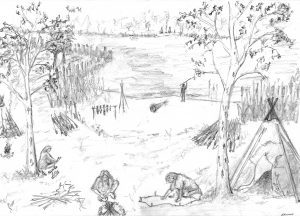
Insight into the hunter-gatherer life
Project information
Project title: Insight into the hunter-gatherer life. Human activities in the light of Late Glacial and Early Holocene archaeological and palaeoceological evidence from Western Poland
Project lead: dr Iwona Sobkowiak-Tabaka
Project lead, institutional: Institute of Archaeology and Ethnology of the Polish Academy of Sciences
Project financing: SONATA
Characteristics
Around 14,000 years ago, after retreating the Scandinavian Ice-Sheet to the North, hunter-gatherers started to appear at the Polish Lowland. This way of life existed up to the spreading of livestock farming and agriculture in the 2-nd half of 7-th millennium. Despite the growing number of multidisciplinary research of older and middle Stone Ages this period is still the poorest recognized in prehistory.
Due to considerable time space the only reminiscences of hunter-gatherers settlement are usually stone and flint tools. It could seem that is very little but carefully “reading” them – getting to know what activities were taken by using them (scarping, cutting, sawing, game hunting, processing of bones, striking fire etc.), or if they were repaired, whether the raw material from which they are made originated from the nearest vicinity of the sites or it had been “imported” from afar. All these will allow in an indirectly way recognize the hunter-gatherers activities. Dispersion of flint artefacts – nodules; cores processed in order to get blanks for tools manufacturing and tools in the campsites allows us to reconstruct its spatial organization, distinguishing the specific zones of human activities (e.g. hide, game processing).
The main aim of the research project is therefore to recognize lifeways of Late Palaeolithic and Mesolithic hunter-gatherers in present-day Western Poland. The project involves seeking the answers for crucial issues concerning existence of these societies – how their life looked like, what they ate, what activities they took, what was their impact on the local environment and whether it is readable for us, and if so, in which data. Were different strategies for livelihood applied by chronologically and culturally diverse communities, and if so, what was it caused by?
The broad spectrum of specific research methods will be adopted to achieve the above mentioned aim. First of all, during 3 seasons of excavations, the hunter-gatherers campsites will be explored, in vicinity of Lubrza and Kopanica, on the Lubuskie Lake District. Materials gained as a result of these investigations will be carefully studied. The comparative analysis between those campsites and known from North European Plain will be conducted.
The radiocarbon dating of organic materials (e.g. animal bones) or charcoal from hearths give us possibility to define the precise age of the campsites.
Due to reconstruction of the environment in which hunter-gatherers existed, multidisciplinary archaeobiological analysis will be carried out. On the basis of pollen content, macroscopic plant remains, mollusc, diatoms (type of algae), cladocerans (type of crustaceans), present sediments of former lakes, on the shores which humans organized their encampments, reconstruction of past landscapes and its changes through time will be possible.
The significant role of the project will also play reconstruction of hunter-gatherers subsistence strategies and plant diet. In order to it the archaeozoological analysis of animal bones, macroscopic plant remains and charred tissue of edible tubers and roots will be adopted.
The special attention will be paid on ability to evidence human impact on the environment, e.g. by burning marsh vegetation on the lake shores in order to facilitate an access to drinking water or fruit harvesting edible aquatic plants.
The geological structure of former lakes, the source of drinking water and food (fish, edible aquatic plants) for hunter-gatherers will be recognized in details. Pollen, geochemical and radiocarbon analysis of lacustrine sediments allow to give the answer – when they originated, what was their range and depth, and how they changed over time.
All the research will give us the possibility to recognize hunter-gatherers lifeways in changing environmental and cultural conditions.