AKTUALNOŚCI
Warning: Attempt to read property "ID" on int in /home/platne/serwer286960/public_html/iaepan.edu.pl/wp-content/themes/prospel/category.php on line 14
Images of Russia: comparative qualitative study in Poland and Germany
Project information
Images of Russia: comparative qualitative study in Poland and Germany
Kierownik projektu: Prof. Dr. Agnieszka Halemba (Polish Academy of Sciences); Prof. Dr. Joachim Otto Habeck (Universität Hamburg)
Financed by Polish-German Foundation for Science
Description:
The aim of the project is an in-depth analysis of narratives on attitudes towards Russia as a state, cultural area and historical-political agent. The research will be carried out in selected regions in Poland and Germany.
Analyses to date, based mostly on survey data and existing sources, point towards significant differences in attitudes towards Russia in both countries. In Germany we can observe ambivalent and diverse narratives, with significant disparities between eastern and western part of the country. In Poland, on the other hand, the image of Russia as inimical state seems to be coherent and stable. Both in Poland and Germany there is observable co-occurrence of both fear and fascination with Russia; however those function differently in both contexts. In Poland Russia plays an important role in building a self-image of Poles as a nation of victims. In Germany awareness of historical, political and economic ties with Russia seems to be more important.
The existing research in the area remains at a generalising level. There is significant lack of research offering in-depth description and analysis of the strategies of argumentation, dominant narratives and topoi functioning in everyday social life.
This project is based on qualitative, un-structured interviews that enable more astute and coherent investigation of narratives about Russia in Poland and in Germany.
Research team at IAE PAS:
- Agnieszka Halemba
- Marcin Skupiński
- Łukasz Smyrski
Research team at University of Hamburg:
- Joachim Otto Habeck
- Natascha Bregy
Warning: Attempt to read property "ID" on int in /home/platne/serwer286960/public_html/iaepan.edu.pl/wp-content/themes/prospel/category.php on line 14
Serengeti of the Early Pastoralists. Searching for the origins of pastoral societies in the plains of East Africa
Project information
Research project’s title: Serengeti of the Early Pastoralists. Searching for the origins of pastoral societies in the plains of East Africa
Project No: SONATA, UMO-2024/55/D/HS3/01454
Project lead: dr Piotr Osypiński
Project lead, institutional: Instytut Archeologii i Etnologii Polskiej Akademii Nauk
Project financing: National Science Centre, Poland
Keywords: Pastoral Neolithic, settlement patterns, chronology, adaptation strategies, Eastern Africa
Kontakt: p.osypinski(at)iaepan.edu.pl
Description:
In the Serengeti - a wildlife sanctuary of the African savannah - ancient humans other than hunter-gatherers are hard to find, hard to imagine. Yet discreet evidence on the walls of rock shelters and seemingly unnoticeable artefacts reflect the past presence of pastoralists in this landscape. The sites of the first communities known to archaeologists from the Pastoral Neolithic period, less than 5,000 years ago, can be counted on the fingers of one hand. They also mark the southernmost fringes of the early pastoral communities that migrated into East Africa from the north.
The preliminary survey we conducted in August 2024 paints a very different picture - there are many more sites of this type, both along the Mbalageti River and on the grassy plains around Sametu and Gol Kopjes. Studying these remains will help us to better understand the processes of migration southwards and the chronology of the spread of the first forms of food-producing economy in this part of the continent. In our project, we will also try to test the long-standing hypothesis about the environmental driver of these migrations in the middle Holocene, using our knowledge and experience in the study of early pastoralism on the Nile. This is the main aim of our project.
We have selected four sites in two ecological zones for excavation in order to trace possible differences between them. We intend to carry out extensive research to document not only small artefacts but also settlement remains - houses, hearths, storage facilities and perhaps burials. The excavations will be accompanied by studies of the use of the wider area - preferences for landscape forms, distance from water and mineral resources. Precise insights will be provided by aerial photographs and digital models of the sites now and in the past. To achieve this, we will use a drone combined with high precision satellite navigation (RTK GPS). This will not only streamline the data collection process but also make it safer for us archaeologists and, no doubt, for the animals of the Serengeti who are watching us closely. Our studies will pay particular attention to dietary issues, both through analysis of animal and plant remains. A modern methods workshop will enable us to study domesticated animals, herd structure and utilisation (meat and livelihoods, including milk yield) in much greater detail than before. In these analyses we will turn to molecular and genetic analyses - risky because they have not yet been used on East African material, but which offer the possibility of constructing a much better vision of early pastoral communities in their "non-human dimension" than before. In the search for plant remains, we will look at macro-remains, pollen, but also micro-residues on ceramic vessels and on the surface of stone querns.
In addition to the Principal Investigator responsible for stone tool analysis and fieldwork coordination, the research team will include specialists in archaeozoology, archaeobotany and ceramology, as well as an RTK GPS survey equipment operator. Research in the Serengeti cannot take place without close collaboration with Tanzanian researchers, who have been working for decades to build a prehistoric picture of human presence in the very cradle of our species. In addition to invaluable formal and logistical support, we will also jointly create an opportunity for the practical development of Pastoral Neolithic archaeology in northern Tanzania by inviting students from the University of Dar es Salaam to participate in field schools during the excavations.
The results of the research on ancient pastoral communities in the Serengeti will be presented both in a series of peer-reviewed articles and at international conferences. The popularisation dimension of the project includes a dedicated website and ongoing social media updates.
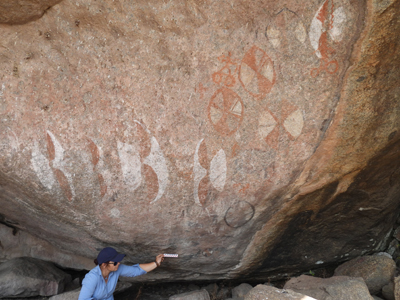
One of the shelters in Moru Kopies (Serengeti) with rock-paintings. Photo P.Osypiński
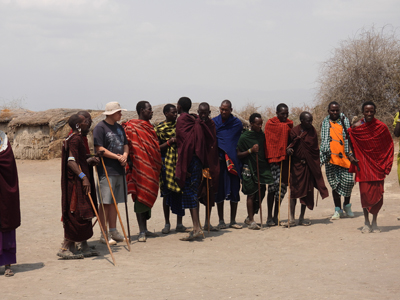
Men from the Maasai tribe near Serengeti. Photo: P. Osypiński
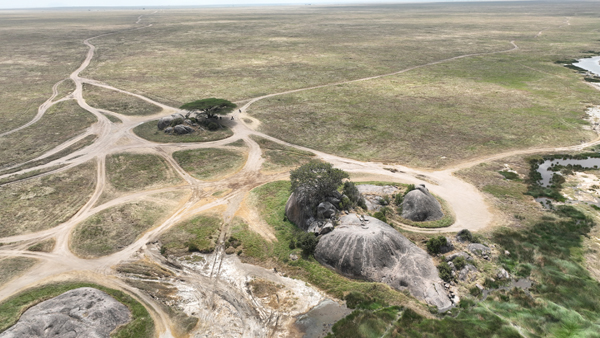
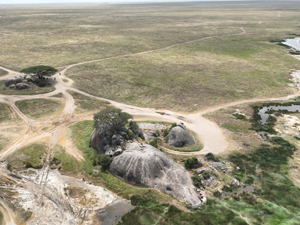
Landscape at the Neolithic settlement in Sametu (Serengeti). Drone photo F. Osypiński
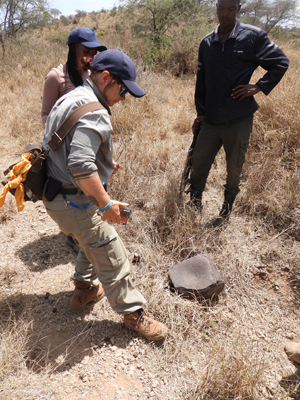
Stone quern on the archaeological site in the Mbalagete Valley (Serengeti). Photo P. Osypiński
Warning: Attempt to read property "ID" on int in /home/platne/serwer286960/public_html/iaepan.edu.pl/wp-content/themes/prospel/category.php on line 14
Consensus and Power: Kingship and Political Culture in Crusader Jerusalem (1100–1192)
Project information
Research project’s title: Consensus and Power: Kingship and Political Culture in Crusader Jerusalem (1100–1192)
Project No: UMO-2025/57/B/HS3/01149; OPUS-29
Project lead: dr Tomasz Pełech
Project lead, institutional: Instytut Archeologii i Etnologii Polskiej Akademii Nauk
Project financing: Narodowe Centrum Nauki
Keywords: WKingship, Crusades, Crusader States, King of Latin Jerusalem, Practice of Rulership
Kontakt: t.pelech(at)iaepan.edu.pl
Description:
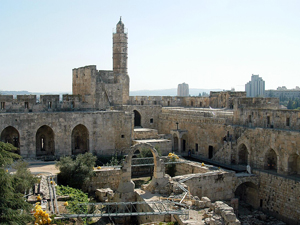
The events of the crusading movement have stimulated human imagination for centuries, resulting in numerous references in contemporary mass culture. The Crusaders could not have realised that many people around the world, almost ten centuries after the capturing of Jerusalem in 1099, would imagined the ideal king through the creation of Baldwin IV (played by Edward Norton) or the ideal queen as Sibylla (by Eva Green) in the movie of Kingdom of Heaven, directed by Ridley Scott. Even with this brief introduction, it is worth mentioning the fact that medieval Europe, with the Kingdom of Jerusalem as its outpost, was a world of kings, and that the presence of the Crusaders, and their survival for 200 years in the Holy Land, was marked by the establishment of the Kingdom of Jerusalem in December 1100, when Baldwin of Boulogne (1100–1118), the first of his name, was crowned king of Jerusalem.
However, what did this actually mean for those who wore the crown and those who did not? Therefore, the questions of what the essence of kingship was, what the ideological basis of this type of rulership was, and what abstract norms meant in practice are crucial to understanding the mechanisms of politics in the Middle Ages. The main aim of the project is to present the idea and practice of kingship in the Kingdom of Jerusalem between 1100 and 1192, i.e. from the reign of Baldwin I to the end of the reign of Guy of Lusignan (1186–1192). Thus, the chronological scope includes the taking of the royal title by the first Latin monarch in Jerusalem and the loss of the Holy City, which had its practical and ideological dimensions related to the reduction of the Kingdom of Jerusalem’s borders to the Levantine coast. This is because, it could be assumed that the loss of Jerusalem represented a clear milestone in the political life of the so-called Crusader states, and the idea of kingship, as well as the whole system of power in Outremer, needed to be reformulated
The project assumes the following research objectives: (1) to determine the impact of Jerusalem, and the monarchs’ ever-increasing emphasis on its sanctity, on the collective ideas about kingship in the Crusader states in the 12th c.; (2) to study the royal title(s), especially through the intitulatio of the charters produced by the chancery of the Kingdom of Jerusalem as the most comprehensive depiction of the king’s presentation; (3) to establish the key ideas in the kings of Jerusalem’s self-presentation: whether was it the imitatio Christi (the imitation of Christ)? (4) to indicate that the practice of royal power in the Kingdom of Jerusalem has never bore the character of the autocratic power, exercised against or without the will of the political elites, therefore, the Kingdom was never seen as the private property of the king and his lineage, who ruled not independently but within a framework defined by a political culture, which can be described as a rule by consensus. These research objectives of the project, although related to the currently dominant historiography of the Crusades and the broader strand of political history, have received little scholarly attention and need to be supplemented and verified.
The study will be based on a corpus of diplomatic sources (ca. 1100 documents), sphragistic, epigraphic, and numismatic materials supplemented by narrative sources, including the oeuvres of Fulcher of Chartres, Albert of Aachen, William of Tyre, and other sources describing the history of the Kingdom of Jerusalem, which convey information about its political culture. Hence, although this source type is much later (ca. 13th c.), the legal treatises as the Assizes of Jerusalem, produced in the Crusader states, will be used as supplementary material.
The project rectifies an important gap in understanding of the political history of the medieval Europe, while undertaking a vital step towards future comparative research with using the case of the Kingdom of Jerusalem.
Warning: Attempt to read property "ID" on int in /home/platne/serwer286960/public_html/iaepan.edu.pl/wp-content/themes/prospel/category.php on line 14
Minyans and Trojans in the Middle Bronze Age (MITAMBA): multi-scale networks in the northern Aegean
Project information
Research project’s title: Minyans and Trojans in the Middle Bronze Age (MITAMBA): multi-scale networks in the northern Aegean
Project No: NCN 2023/50/E/HS3/00578
Project financing: Narodowe Centrum Nauki, SONATA BIS-13 competition
Keywords: production, consumption, and distribution networks; chemical analysis; petrography; experimental archaeology; morphometrics
Project lead: Christopher Mark Hale
Project lead, institutional: Institute of Archaeology and Ethnology of the Polish Academy of Sciences
Description:
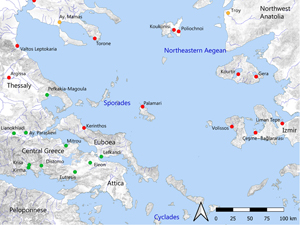
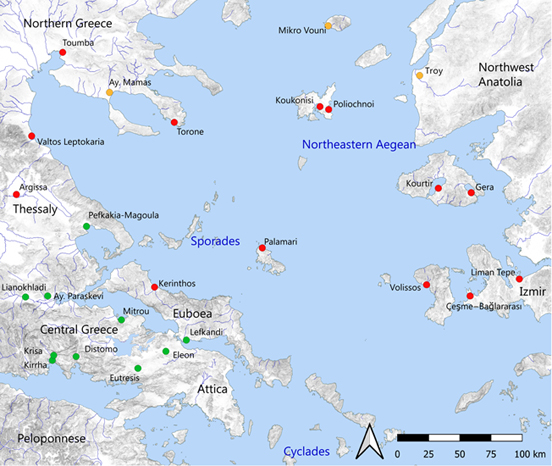
MITAMBA investigates the connections between central Greece and the northern Aegean during the Middle Bronze Age (MBA, ca. 2100—1550 BCE). This region has often been viewed as peripheral to the contemporary networks centered on Crete, the Cycladic islands, Aegina, and the southern Greek mainland. Nevertheless, there are signs of significant long-distance links, such as the introduction of the potters’ wheel from northwestern Anatolia to central Greece at the end of the Early Bronze Age (Rutter 1979; 2008; Choleva 2018; 2020) or the notable technological similarities, along with central Greek typologies, among certain pottery types found along the coast of northwestern Anatolia and in central Macedonia during the later MBA (Pavúk 2007; 2008; 2010; Horejs 2007a; 2007b). However, the materials representing these phenomena have rarely undergone analytical examination, often leaving their origins uncertain and the dynamics unclear. Similarly, occasional parallels have been observed across broader material culture (including chipped stone tools, weaving equipment, and architecture), suggesting largely unexplored connections beyond pottery production and consumption.
MITAMBA hypothesizes that some MBA communities throughout these regions were variously connected, and that these links can be identified through similarities or regionalisms in the production, consumption, and distribution of material culture. These links may have ebbed and flowed due to a myriad of factors, such as the appearance or disappearance of important nodes, the advent of important innovations in transportation technologies, or shifts in wider regional networks. Exploring these connections is crucial to properly understand this region’s role as a potential intermediary between the southern Aegean and places like central and eastern Europe or northwestern Anatolia.
With resources for new sampling and analytical examinations, the cataloguing of important assemblages, network and chronological modelling, experimental archaeology, and investigations of morphometrics and use-wear, MITAMBA brings together a range of expertise to produce insights allowing central Greece and the northern Aegean to be considered within inter-regional dynamics and with new perspective.
Interested in contributing or collaborating? Contact c.hale(at)iaepan.edu.pl
Latest activities:
12/06/2025:
MITAMBA PI Christopher Hale and Bartłomiej Lis (IAE PAN) presented a paper titled “Re-Evaluating Central Euboean Middle Bronze Age Pottery Production and Distribution” at the Spaces and Landscapes of Production in the Aegean World and Beyond workshop organized by Sylviane Déderix and Stephanie Aulsebrook at the University of Warsaw.
This paper used new neutron activation analysis results to argue that central Euboean pottery production in the Middle Bronze Age was far more intensive and had a far greater distribution than previously understood. For MITAMBA, this raises the significant possibility that many so-called “True Grey Minyan” pots known throughout central Greece, and occasionally identified at some island and coastal sites in the northern Aegean, could be central Euboean imports. This requires more sampling and future investigations.
08/06/2025:
Salvatore Vitale (University of Pisa) and MITAMBA PI Christopher Hale presented a paper titled “Bridging Sequences: Northeast Peloponnese Deposits as Proxies for LM IA-LH I Synchronisms between Crete and Central Greece” at the Reconsidering LM IA Pottery Sequences and Chronologies workshop organized by Emilia Oddo and Iro Mathioudaki at the INSTAP Study Centre in Pacheia Ammos on Crete.
This paper synchronized the emerging Central Greece Late Helladic I pottery sequence as represented at Mitrou in East Lokris with the better known sequences in the southern Aegean. In doing so, one of MITAMBA’s core regions can now be linked to a much more established regional relative chronological framework at the end of the MBA and the early LBA, allowing a better understanding of diachronic developments and their importance.
11/04/2025:
MITAMBA PI Christopher Hale and Johannes H. Sterba (Technical University of Vienna) published the open access paper “From Pottery Provenance to Multiscale Diachronic Connectivity at Middle Bronze Age Mitrou, Greece” in the European Journal of Archaeology.
While the paper is focused on connectivity between central Greece and the southern Aegean, some important neutron activation analysis groups point to northern links, such as with Magnesia or Thessaly. Some small unlocated groups hint at links elsewhere, perhaps to the northern Aegean, but further investigations are required.
Warning: Attempt to read property "ID" on int in /home/platne/serwer286960/public_html/iaepan.edu.pl/wp-content/themes/prospel/category.php on line 14

Producing medieval history within Roman Catholic and contemporary Pagan religious practices in Poland
Producing medieval history within Roman Catholic and contemporary Pagan religious practices in Poland
Project information
Research project’s title: Producing medieval history within Roman Catholic and contemporary Pagan religious practices in Poland
Project No: NCN 2022/46/E/HS3/00118
Project financing: Narodowe Centrum Nauki, konkurs SONATA BISResearch team: dr hab. Kamila Baraniecka-Olszewska (PI), dr Kaja Kajder, mgr Paweł Karolczyk
Charakteristics
The project aims at ethnographic research on producing medieval history within religious practice. Fieldwork will be conducted in three regions of Poland: Małopolska (Lesser Poland), Wielkopolska (Great Poland) and Pomorze Zachodnie (Western Pomerania). The subject of the study are Roman Catholic and contemporary Pagan celebrations and their role in interpreting the past. Reflection on the place of religion in social life has been dominated by secularization paradigm which ascribes religion less importance. Such a research approach has limited looking for new places in which religion is present. This project offers investigation on one of such places, namely producing history within religious practice. To achieve this goal it applies post-secular perspective enabling research on how secular and religious are defined and used in social practice, dependently on situation or needs. Moreover, such an approach opens a way for considerations on intertwining of these two notions and finally leads to undermining the dichotomy: secular – religious. Therefore the post-secular perspective encourages crafting new interpretive categories allowing for leaving the secularization paradigm. Empirical research on producing history within religious practice and on the role of this history in the public sphere offers possibility to develop new approach discerning the unrecognized places of religion in the social life.

Obrzęd dziadów w Gieczu 2023, fot. K. Baraniecka-Olszewska
Warning: Attempt to read property "ID" on int in /home/platne/serwer286960/public_html/iaepan.edu.pl/wp-content/themes/prospel/category.php on line 14
From the first to the last Mycenaeans in the area of the Gulf of Volos (Thessaly)
Project information
Research project’s title: From the first to the last Mycenaeans in the area of the Gulf of Volos (Thessaly)
Project No: NCN 2020/38/E/HS3/00512
Project financing: Narodowe Centrum Nauki, konkurs SONATA BIS
Keywords: Mycenaean culture, Thessaly, Late Bronze Age, Aegean archaeology
Project lead: Bartłomiej Lis
Project lead, institutional: Institute of Archaeology and Ethnology of the Polish Academy of Sciences
Characteristics
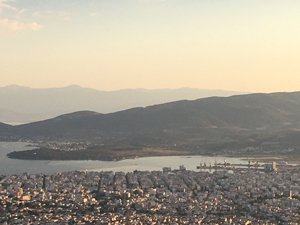
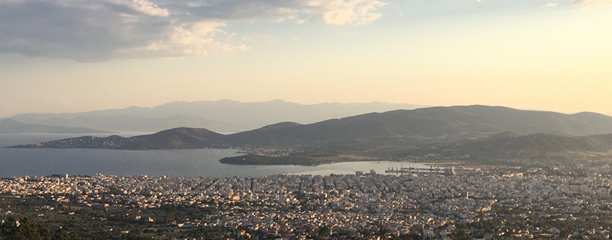
The region of Thessaly, located in the northern part of Central Greece, for a long time has been considered as a periphery of the Late Bronze Age (1650-1050 BC) Greek Mainland, characterized by a culture that is referred to as Mycenaean. However, due to extraordinary discoveries over the last 30 years in its coastal part, in the area of the Gulf of Volos, this view is subject to dramatic change. These discoveries include a previously unknown administrative center at Dimini, otherwise famous for its Neolithic remains, the finding of two Linear B tablets at the site of Kastro Palaia in Volos, the first such written documents to be found north of Boeotia, and an industrial quarter at the site of Pefkakia, beyond the artificial tell that was considered to be the location of also Late Bronze Age settlement. This important research has attracted much of scholarly attention, and coastal Thessaly is now perceived more as a core Mycenaean area rather than a periphery.
This project will investigate how the societies of coastal part of Thessaly became fully Mycenaean, at least in terms of material culture remains accessible to archaeologists. This process was a gradual one, and was a result of both internal processes and external influences. The mechanisms of this change in material culture, so far poorly understood, are the main focus of this project. In order to shed light on them, the analysis will be conducted on multiple levels – starting from individual sites, through regional perspective including the interactions between the main settlements, to the relationships of coastal Thessaly with other regions. The hypothesis proposed here is that in the first stage of the process, the adoption of some elements of Mycenaean culture was the initiative of local elites that competed among themselves for power and prestige. In later times, the direct interest of palatial polities that formed in the south might have played a decisive role.
Two large components will contribute to answering the research questions of the project. One of them is the study of materials deriving from old excavations in the area, the other focuses on the site of Pefkakia and involves fieldwork with three excavation seasons. Material from old excavations includes predominantly pottery and its study will have two main aims – to establish precise relative chronology, necessary to reconstruct the interactions between settlements within coastal Thessaly, and to understand the contacts of Thessaly with other regions thanks to identification of imported pottery. This will be achieved through an application of several scientific analyses, combining non-destructive and destructive methods.
The site of Pefkakia, the focus of the second component, has the largest potential out of the three big sites in the area to reveal new information. Research conducted there so far revealed only a small portion of the site, and it may be that it is the largest one in coastal Thessaly, and not the smallest as believed so far. Another exciting perspective is the location of ancient harbour, since it is assumed that Pefkakia was a major port in the Late Bronze Age. It is clearly shown by numerous finds of large transport containers (stirrup jars, mostly from Crete) and single imports from as far as Near East. Geophysical and geoarchaeological investigation will be carried out to learn as much as possible about the site and its history before excavation starts in the most promising areas of the site. The investigations at Pefkakia will be a collaboration between the Institute of Archaeology and Ethnology, Polish Academy of Sciences, and the Ephorate of Antiquities of Magnesia, under the auspices of the newly established Polish Archaeological Institute at Athens.
Warning: Attempt to read property "ID" on int in /home/platne/serwer286960/public_html/iaepan.edu.pl/wp-content/themes/prospel/category.php on line 14
From waste to workshop
Project information
Project Title: From waste to workshop. Activity areas in settlements of the Pleszów-Modlnica Group of the Lengyel-Polgar Circle from the western Lesser Poland in the light of functional and spatial analyses of lithic artefacts
Project No.: NCN 2022/45/N/HS3/03475
Financed: National Science Centre, Poland, Preludium 21
Keywords: The Neolithic, the Pleszów-Modlnica Group, The Lengiel-Polgar Circle, lithic
analysis, use-wear analysis, intra-site analysis
Project lead: Tomasz Oberc
Project lead, institutional: Institute of Archaeology and Ethnology, Polish Academy of Sciences
email: toberc(et)iaepan.edu.pl, tomaszoberc(et)gmail.com
Characteristics
In the second half of 5th millennium BC in the western Lesser Poland a local variant of so called Lengyel-Polgar Circle (LPC) exist, known as Pleszów-Modlnica Group (PMG), with a division on older (Pleszów) and younger (Modlnica) phases. Most of basic characteristics, such as sedentarism, agriculture, general localisation, forms of settlements and houses, form and localisation of burials or rudimentary tool inventory of LPC are shared with model established by Linear Pottery Culture (ger. Linerabandkeramik, LBK) about a millennium earlier. At this time another set of changes in circulating styles of pottery, settlement and symbolic systems is observable in the area south of Carpathians, known as the Enelithization. Although some of the Eneolithic elements are visible in Lesser Poland only after 4000 BC, some of inferred economical changes included in ‘the Eneolithic package’, as a spread of flint mining techniques can be seen also in PMG. This process was also observed in changes the flint industry, and is thought to cause a shift in local settlement system.
A goal of the proposed project is to find patterns in work organisation within the settlements of Pleszów-Modlnica Group in Western Lesser Poland based on lithic implements, that would reflect economic choices of these societies. More detailed question concerns changes in these patterns between Pleszów and Modlnica phases of PMG. The hypothesis is, that the general model of activity around the household established at the beginning of Neolithic in area north of Carpathians by LBK people was kept, with some adaptations. The exact scope of these differences can be inferred by study of tasks achieved in settlements and subsequently checking how it fits in general model of Neolithic societies’. It is assumed, that the patterns of activity should be observed based on the sets of used lithic artefacts.
The work plan includes 4 stages of study. Firstly, an evaluation of materials and documentation from PMG sites will be made, resulting in ranking of 10 clusters of features most appropriate to planned analyses. During this task, 15 samples for radiocarbon dating will be selected, examined by specialists and send. Secondly, a use-wear analysis will be performed, enhanced by morphometric analyses and experimentation, to establish a way the lithic artefacts were used. Lithic artefacts selected for residue extraction and analysis will be chosen and send to the laboratories. The third task is a spatial and stratigraphic analysis of selected clusters of features. Aided with obtained radiocarbon data, models of deposition will be created based on catchment areas of features, with extraction of potential zones, where the artefacts have been used. Combination of these areas will be then constructed representing places, where specific tasks have been performed. Tasks – sets of simple activities performed on the specific material, such as hide tanning - will be contextualised in network model of processing of raw materials, and compared between sites to obtain generalised model of PMG economic behaviour. Detailed analysis will be conducted by comparison of spaces used for tasks in settlements. An interpretations will be made basing on known facts from other Neolithic sites, mainly of LPC, experimental and ethnographic data.
Lithic artefacts of PMG will be analysed with use of up-to-date protocols and equipment, that create an opportunity to reassess results obtained during earlier studies of this archaeological taxon. Obtained data on use of lithic artefacts will be supplemented with the zoological and botanical data, as well as residues analyses, resulting in multiproxy study of economic choices of the Neolithic societies. Analysis of chains of use and deposition, as well as conceptualisation of work division, will aid interpretation of PMG and Neolithic economic systems. This study is also set to shift the focus from lithic production to lithic usage and deposition. In doing so, it proposes dynamic work frame of use-wear analysis of Neolithic assemblages. As a result the “classic” Neolithic sites from the Lesser Poland area will be recontextualised, and provided with new radiocarbon determinations aiding understanding of reception of Eneolithization process in the periphery of the Central-European Neolithic ecumene.
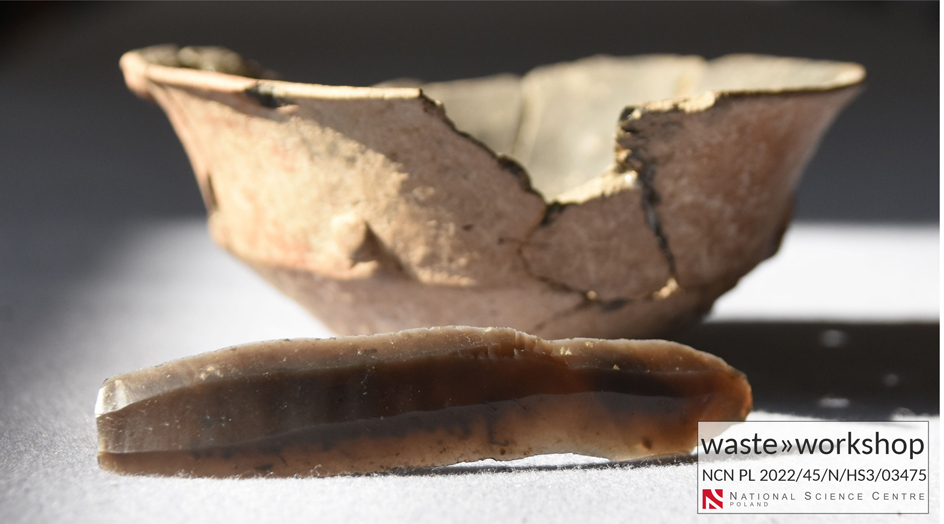
Part of assembly from a grave of Pleszów-Modlnica Group from site 1 in Dziekanowice, Działoszyce Comm. (collection of Archaeological Laboratory IAE PAS in Igołomia)
Warning: Attempt to read property "ID" on int in /home/platne/serwer286960/public_html/iaepan.edu.pl/wp-content/themes/prospel/category.php on line 14
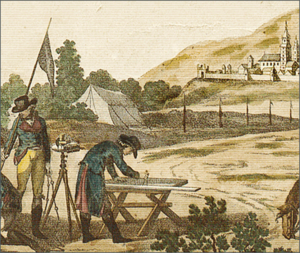
Topographic map of Galicia (1779–1783) from War Archives in Vienna
Project information
A package of coordinated projects for the publication of the Josephine land survey of Galicia. They are being prepared thanks to grants awarded by the Foundation for Polish Science, the Ministry of Science and Higher Education, the National Science Centre, and the National Program for the Development of the Humanities in the years 2008-2021.
Five institutions are involved:
Institute of Archaeology and Ethnology, Polish Academy of Sciences (project leader: Andrzej Janeczek),
Institute of History, Polish Academy of Sciences (project leader: Waldemar Bukowski),
Institute of History of the Pedagogical University in Cracow (project leader: Zdzisław Noga).
Institute of History of the University of Rzeszów (project leader: Zdzisław Budzyński),
Polish Academy of Sciences Scientific Center in Vienna (Bogusław Dybaś).
Project website http://www.iaepan.vot.pl/galicja/index-en.html
Deutsche Fassung http://www.iaepan.vot.pl/galicja/index-de.html

Warning: Attempt to read property "ID" on int in /home/platne/serwer286960/public_html/iaepan.edu.pl/wp-content/themes/prospel/category.php on line 14

THE PAST SOCIETIES. Polish lands from the first evidence of human presence to the Early Middle Ages
Project information
Project title: THE PAST SOCIETIES. Polish lands from the first evidence of human presence to the Early Middle Ages
Project No: 11H 11 0186 80
Project lead: Prof. dr hab. Przemysław Urbańczyk
Project lead, institutional: Institute of Archaeology and Ethnology of the Polish Academy of Sciences
Project financing: Research financed within the National Humanities Programme, a project of the Ministry of Science and Higher Education, in 2012–2015
Contact:
e-mail: uprzemek@iaepan.edu.pl
phone (22) 620-28-81 do 86
Project implementation:
Institute of Archaeology and Ethnology of the Polish Academy of Sciences
Characteristics
The aim of the project is to write and publish a synthesis of the prehistory of Polish lands in English. It will be an up-to-date compendium of knowledge on cultural processes in the period from more than 0.5 million years ago, when the first settlers came to these lands, to the establishment of a stable state organization which around the year 1000 became an integral part of Latin Europe. In recent years, due to intensified excavations throughout the country, there has been a rapid increase in the number of new archaeological finds that led to many, often revelatory discoveries. There have been also considerable changes in archaeological research methods. They have been partly due to the development of the theoretical basis and methodological perspectives in the field which provided a new insight into both social and historical processes as well as the classification and chronology of available sources. Furthermore, our knowledge on all historical periods has fundamentally changed since “The Prehistory of Polish Lands” (1975-1979) was published. A new synthesis of the prehistory of Polish lands should go beyond offering a potential new classification and chronology of the past events and take up the challenge of presenting a new interpretation of this distant past. The resulting monograph will be addressed both to archaeologists and to representatives of other disciplines (mainly historians). The final result of the project will be a 5-volume book in English. It will be published as well in an electronic version (e-book).
Warning: Attempt to read property "ID" on int in /home/platne/serwer286960/public_html/iaepan.edu.pl/wp-content/themes/prospel/category.php on line 14
Archaeological Mission in Wilczyce
Project information
Project title:: Man, the environment and the economy: Economic exploitation of Wilczyce micro-region in the Neolithic and Bronze Age.
Project lead: Dr Tomasz Boroń
Project lead, institutional: IAE PAN
Project financing: IAE PAN, Voivodship Landmark Preservation Inspectorate in Kielce – Sandomierz Office; Karpacka Spółka Gazownicza company, Sandomierz branch; Chief Executive Officer of Świętokrzyskie Voivodship.
Contact:
- e-mail: boron@iaepan.edu.pl
- telephone: 502 102 754
Project implementation
Institutions involved:
IAE PAN Institute, Warsaw,
Voivodship Landmark Preservation Inspectorate in Kielce – Sandomierz Office,
Karpacka Spółka Gazownicza company, Sandomierz branch,
Chief Executive Officer of Świętokrzyskie Voivodship,
Wilczyce Municipality
Researchers involved:
Dr Tomasz Boroń
Mgr Halina Królik
University of Warsaw students
Responsibilities: students – exploration, inventorying finds, drawing plans
Characteristics
Research objective:
Wilczyce 10, Świętokrzyskie Voivodship, is known as one of the most important Final Ice Age sites in Europe, yielding a collection of Magdalenian artefacts that is both huge and unique. The findings of research into Late Palaeolithic settlement were published in national and international journals — and the successes of the research have inspired the local authorities at Wilczyce to put up an archaeological open-air museum and a covered museum.
The resulting follow-up excavations, necessitated by the planned construction project, have revealed astonishing, unique traces of Neolithic settlement. Several thousand flint and ceramic artefacts, animal-consumption bones, and a plenitude of plant micro- and macro remains.
Detailed goals of the project:
The project agenda includes cataloguing the finds and searching for more of archaeological material. Thanks to the geo-morphological conditions, conducive to artefact preservation, it will be possible to accurately reconstruct the environment and have a look into the community’s economic arrangements. But specialist analyses have to be conducted on a wide scale. Their findings will be included in a typescript report on research outcomes, which will provide a basis for producing a monograph in the future.
Measures to achieve the goals:
The exceptional insights obtained from the remains of Wilczyce 10 settlement greatly expand our knowledge about Neolithic populations in southern Poland. Comprehensive research at Wilczyce is also of high importance for the micro-region.
Project timetable:
The project agenda involves several years of excavation research
Results so far:
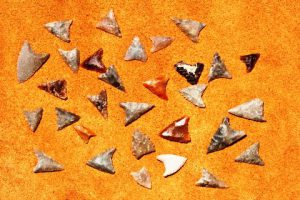
Discovery of an exceptional Corded Ware sepulchral object, containing 13 whole vessels, 6 battleaxes, 6 axes, 29 arrowheads, a dog-fang pendant necklace and many bone and horn artefacts.
Planned results:
To publish a monograph on Neolithic settlement in Wilczyce micro-region